
🌉 bridged from !cassettefuturism@lemmy.world by Tidepool
 View on lemmy.world
Oh my gosh... a "microfiche" look-up from the 50's!
Oh my gosh... a "microfiche" look-up from the 50's!
Oh course, this comes from the brilliant web-project SHORPYS: https://www.shorpy.com/node/27980 I actually DO remember these suckers. I mean-- the little strip-tapes and the viewings machines? My dad absolutely loved that tech, and was glad to drag me along sometimes, and... me being a nerd / doofus, I was... reluctantly impressed? But... I mean... what the *hell* was a "microfiche," anyway? https://en.wikipedia.org/wiki/Microform
The transfluxor-powered "Arma" microcomputer from 1962, the first of its kind?
The transfluxor-powered "Arma" microcomputer from 1962, the first of its kind?
What would you say is the first microcomputer? The Apple I from 1976? The Altair 8800 from 1974? Perhaps the lesser-known Micral N (1973) or Q1 (1972)? How about the Arma Micro Computer from way back in 1962. The Arma Micro Computer was a compact 20-pound transistorized computer, designed for applications in space such as inertial or celestial navigation, steering, radar, or engine control. Obviously, the Arma Micro Computer is not a "microcomputer" according to modern definitions, since its processor was made from entirely discrete components. But it's an interesting computer in many ways. First, it is an example of the aerospace computers of the 1960s; advanced systems that are now almost entirely forgotten. People think of 1960s computers as room-filling mainframes, but there was a whole separate world of cutting-edge miniaturized aerospace computers. (taking up just 0.4 cubic feet, the Arma Micro Computer was smaller than an Apple II.) Second, the Arma Micro Computer used strange components such as transfluxors, and had an unusual 22-bit serial architecture. Finally, the Arma Micro Computer evolved into a series of computers used on Navy ships and submarines, such as the E-2C Hawkeye airborne early warning plane, the Concorde, and even Air Force One. --blog below, with some JE edits
https://www.righto.com/2024/02/the-first-microcomputer-transfluxor.html Weirdly, WP only seems to have a ghost of an article at this time: https://en.wikipedia.org/wiki/Arma_Micro_Computer
1984 Electra Westone "FUTURA"
1984 Electra Westone "FUTURA"
In the late 1970s, the Matsumoku factory in Japan was beginning to build and market Westone guitars. The majority of these instruments were high quality, innovative design instruments with limited (not mass) production. Westone guitars were first introduced to the U.K. market by 1981.After changing the Electra brandname to Electra/Phoenix in 1984, St. Louis Music announced that the Electra trademark would be merged with Westone in the U.S. market. From, 1984 to 1985, models were sold under the Electra by Westone, or Electra/Westone, imprint.
Benjamin J. Heckendorn's hilariously-brilliant portable console mods -- Atari 2600 Jr edition! (story in post)
Benjamin J. Heckendorn's hilariously-brilliant portable console mods -- Atari 2600 Jr edition! (story in post)
https://www.benheck.com/project-started-in-2000-finally-finished-atari-2600-junior-single-chip-portable/ For those who like video of the story, here's the video: https://www.youtube.com/watch?v=4EUMil5B3Os For those who like the 'maker process,' here be photos: https://www.benheck.com/atari-2600-junior-single-chip-portable/ image https://www.benheck.com/wp-content/uploads/2019/12/6_top_half_only_flat2.jpg
When I first starting buying Atari 2600 consoles for modding purposes back in 2000 (right after my website became famous) I was lucky enough that my first Atari 2600 Junior had the ultra-rare “single chip” variant inside. Of course this was “portablization catnip” for me so I desoldered it and tried to make a custom PCB. My skills at the time weren’t up to task and I feared the chip dead. Had I know then how rare it was (I’ve never found another since) I probably wouldn’t have tried but can’t change that now. --Ben Heck
Personally, the Atari 2600 was my very first videogame as a child (obligatory: yes I'm old). And all these decades later, it is soooo fun to see inspired projects like this, such as 'Ben Heck' getting after it right here. 💙
Conion C-100F
Conion C-100F
Widely regarded as THE boombox/ghettoblaster.
NASA's "DSKY" interface, and the Apollo missions' signature guidance computer (notes in post)
NASA's "DSKY" interface, and the Apollo missions' signature guidance computer (notes in post)
This is one of those ones in which a complete dumbass like me just loves the basic design, then tries to scramble to figure out more context and info, lol. Oh man, I would LOVE it if someone more knowledgeable than a bumbling doofus could add some notes, please? That said, here we go! XD
The Apollo Guidance Computer (AGC) is a digital computer produced for the Apollo program that was installed on board each Apollo command module (CM) and Apollo Lunar Module (LM). The AGC provided computation and electronic interfaces for guidance, navigation, and control of the spacecraft.[3] The AGC was the first computer based on silicon integrated circuits (ICs).[4][5] The computer's performance was comparable to the first generation of home computers from the 1970s, such as the Kenbak-1, Apple II, TRS-80, and Commodore PET.[6] At around 1 cubic foot (28 litres) in size, the AGC held 4,100 IC packages.[5]
image https://thumb.wikimedia.org/wikipedia/commons/thumb/7/79/Agc_view.jpg/500px-Agc_view.jpg?utm_source=en.wikipedia.org&utm_campaign=imageinfo&utm_content=thumbnail
The AGC has a 16-bit word length, with 15 data bits and one parity bit. Most of the software on the AGC is stored in a special read-only memory known as core rope memory, fashioned by weaving wires through and around magnetic cores, though a small amount of read/write core memory is available. Astronauts communicated with the AGC using a numeric display and keyboard called the DSKY (for "display and keyboard", pronounced /ˈdɪski/ DISS-kee). The AGC and its DSKY user interface were developed in the early 1960s for the Apollo program by the MIT Instrumentation Laboratory and first flew in 1966.[7] The onboard AGC systems were secondary, as NASA conducted primary navigation with mainframe computers in Houston.[8]
https://en.wikipedia.org/wiki/Apollo_Guidance_Computer image https://thumb.wikimedia.org/wikipedia/commons/thumb/b/bd/Apollo_display_and_keyboard_unit_%28DSKY%29_used_on_F-8_DFBW_DVIDS683588.jpg/500px-Apollo_display_and_keyboard_unit_%28DSKY%29_used_on_F-8_DFBW_DVIDS683588.jpg?utm_source=en.wikipedia.org&utm_campaign=imageinfo&utm_content=thumbnail
"While much of the Apollo computer used transistors, the DSKY still used relay switches, which is why it makes a satisfying clicking sound when it updates."
Holy Hecubah, that's... part of why I love my old electro-mechanical pinball machines. ❤️ Oh, and here's a builder project, make your own, mate! https://hackaday.io/project/186074-dsky
I don't have a great source for this one, but see what you think... (National / Panasonic's RX-F333.90 triple-tape boombox, 1985)
I don't have a great source for this one, but see what you think... (National / Panasonic's RX-F333.90 triple-tape boombox, 1985)
Evidently this one was popular in Japan. I guess mainly used for dubbing..?
I actually DID have a two-cassette boombox way back when, and you could have bowled me over with a feather if you declared that 'one more tape head was needed!' 😄
notes in post
"Nothing" wireless headphones ("well if it's nothing, then why are we wasting our time, Freddy!?" --Shaggy Rogers)
"Nothing" wireless headphones ("well if it's nothing, then why are we wasting our time, Freddy!?" --Shaggy Rogers)
https://www.google.com/search?q=Shaggy+from+Scooby+Doo+looking+skeptical&udm=2 (bof... I couldn't find just the right image, so)
The sound is by KEF, the design is by Nothing. As such they sound great & look great. Battery lasts well, comfort is good, EQ & NC is impressive. Price? Unbeatable.
I got them to replace my worn down AirPods Max, I'm no audiophile but I'd say the noise cancellation is the same and the sound is a bit worse than Apple, but like exactly worse as you'd expect for $200 less
I wish the earbuds (I had the Nothing Ear (a)) were better. They did sound great, and the pinch controls worked well. But I can't justify getting them again after I experienced their battery issues. On one or both of the earbuds, they will no longer charge fully and drain within minutes. If you look up reviews on sellers and forums, this comes up a lot. Some users have had it happen multiple times with multiple sets. Nothing does not honor a warranty after a year, and customer service is not helpful. They are still rated very highly by customers and professional reviewers, because they ARE great at first, and reviewers typically review them immediately. I really wish I could have gotten them again for the price, sound, controls, and style, but they have very obvious QC issues, and recent posts by scorned users will show that it's still a problem.
-- comments via the EE Unfortunately, Nothing's site is overloaded with toxic javascripts, but I think the example here is this one? https://us.nothing.tech/products/headphone-1 Haha... all that said, I'm an older git, and don't really give a toss about audiophiles' blazing obsession upon this stuff. Like, just give me a set of $5 earbuds to let me listen to some MP3's, and I'm good. Oh heck, I'll even sing the songs back to you on karaoke night! 🙂

Seiko Speedmaster #SSBA018 (by automotive designer Giorgetto Giugiaro, 1983)
Seiko Speedmaster #SSBA018 (by automotive designer Giorgetto Giugiaro, 1983)
The Seiko site says that this watch was also designed to be used on the handlebars of a motorcycle. All of the first Speedmasters had innovative and practical ideas in their designs: https://by.seiko-design.com/140th/en/topic/55.html
Cyriak Harris' lovely teddy-bear loop
Cyriak Harris' lovely teddy-bear loop
 youtube.com
It's the day that Worthing sea-front was invaded by infinite teddy-bears! (note: no teddy bears were harmed in the making of this video)

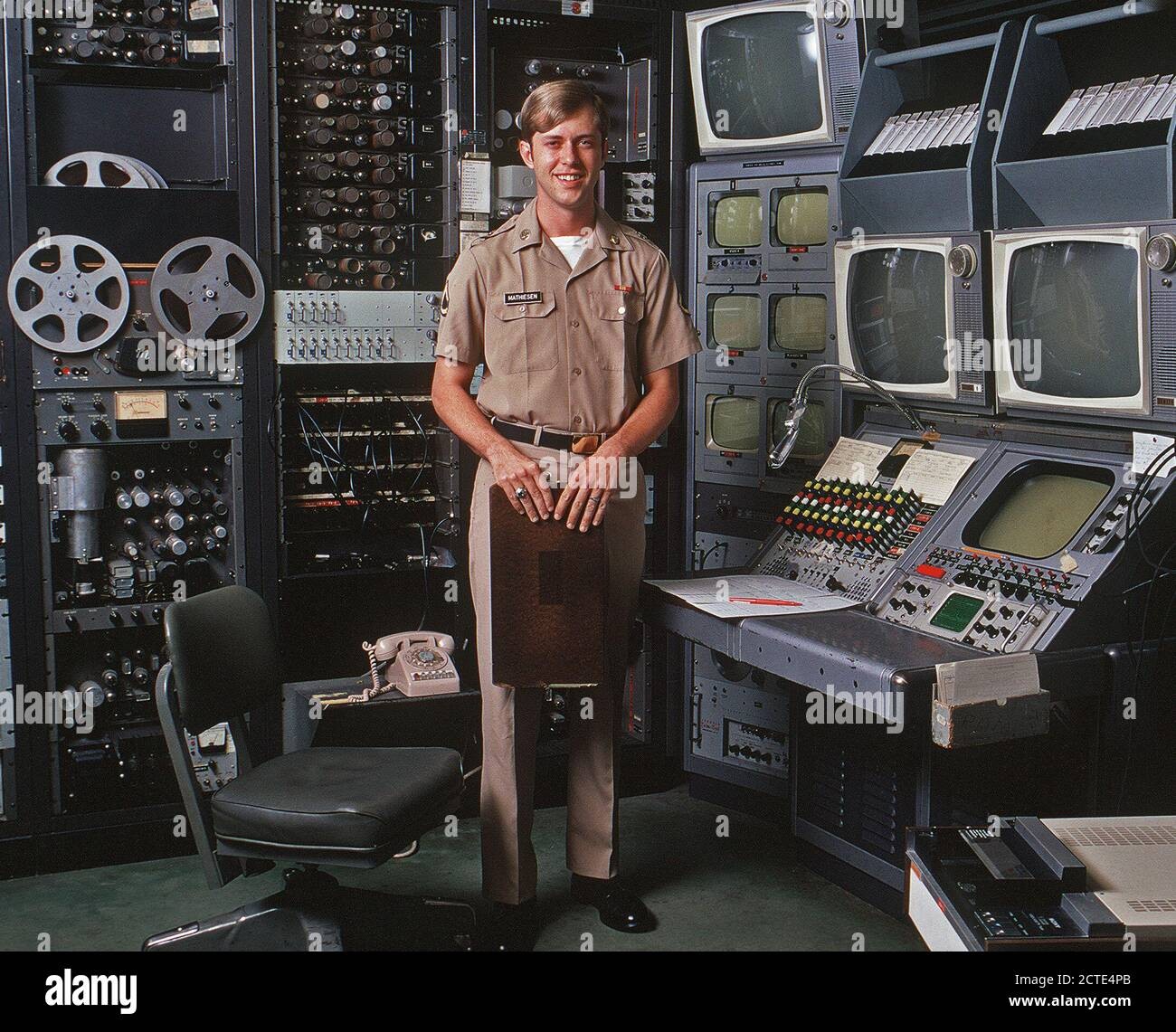
Military videotape-editing station, 1973. and a small mystery
Military videotape-editing station, 1973. and a small mystery
I'm not happy about this one, but I've run in to a brick wall so far looking for more info. So I'm going to need some AI-spotters to help me figure this one out, please. Unless of course I'm wrong, and both pics are legit. But I have my doubts... ufWq3BBLiGY4T1e.jpg In any case, this particular AV videotape station allegedly belonged to the US army, and in the 2nd pic, it's a PFC Mathesen who's the particular technician posing. EDIT: Mystery seems solved thanks to a couple folks below. Evidently these are two genuine photos, likely shot the same day. I remain curious about the first person's uniform though, since it seems so different from the second person's.




Surely this was Batman 1966's alternate car-build? (it's the 1962 Ford Seattle-ite XXI)
Surely this was Batman 1966's alternate car-build? (it's the 1962 Ford Seattle-ite XXI)
If I understand correctly, the original Batmobile was in fact based on a 1955 Lincoln Futura concept car. Kind of wild, as the first Batman TV series launched 11yrs later! Sorry for the lack of info / pics, but Spectrum basically crippled my internet on Monday, and I'm still trying to figure what the hell's going on. In any case, here's more pics of this memorable automobile: https://www.google.com/search?q=1962+Ford+Seattle-ite+XXI&udm=2
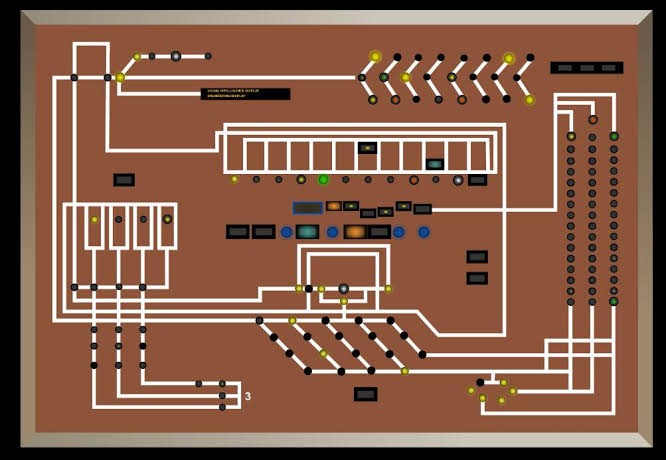
I love how this power plant control room also features a wall schematic that echoes ST TOS! (more in post)
I love how this power plant control room also features a wall schematic that echoes ST TOS! (more in post)
Of course, it's almost invariably the opposite. 😄 I.e., ST TOS stole the idea and used it in the engineering room, most commonly. wV20dqgyOAWANFF.jpg Many more examples of these control rooms here: https://kottke.org/26/10/so-many-amazing-control-rooms
Nagra-brand recorder / synth / music stack (notes in post)
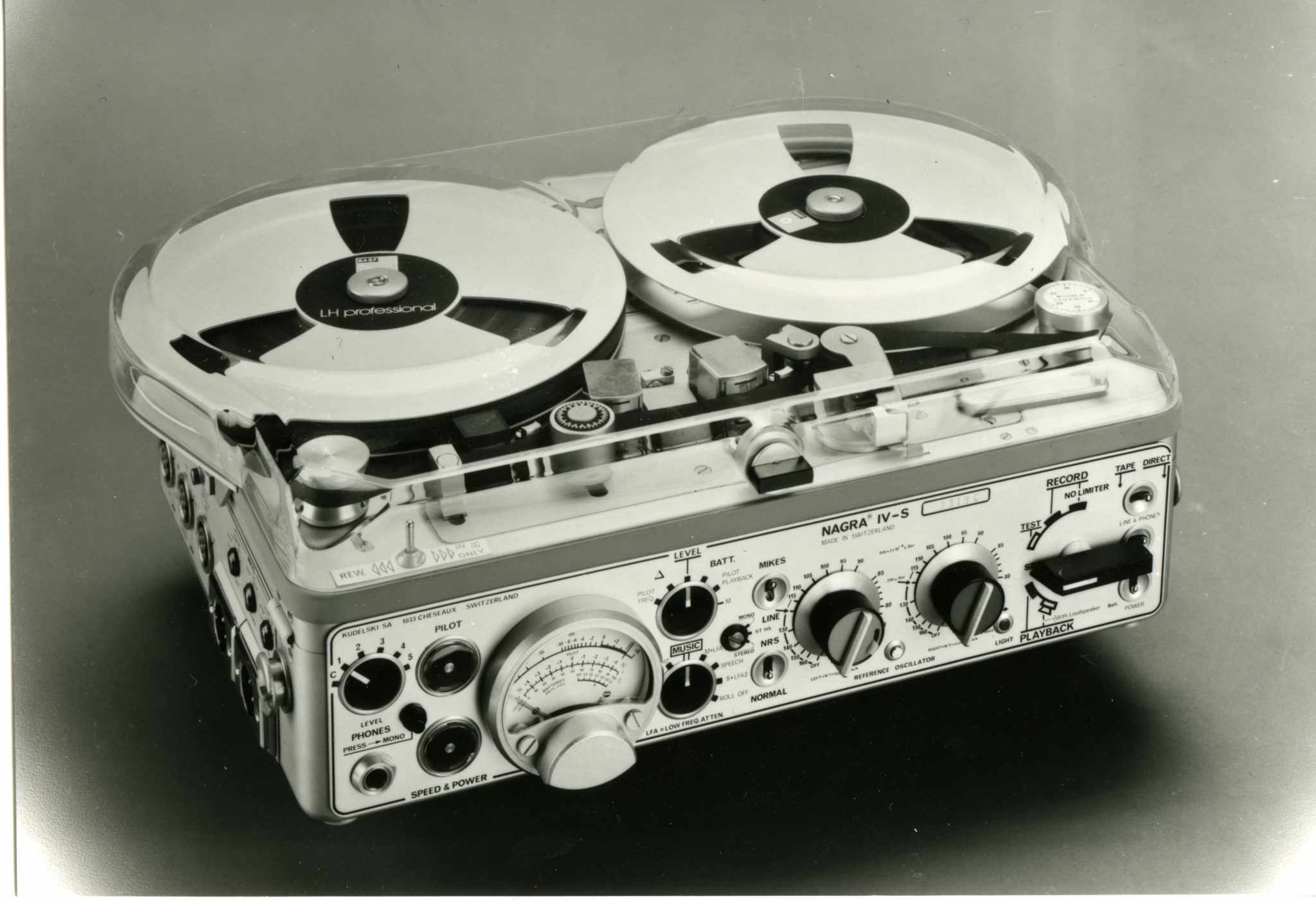
Nagra-brand recorder / synth / music stack (notes in post)
Nagra is a Swiss brand of portable audio recorders first introduced in 1951. In 1997, the company expanded into new markets by launching a range of high-end equipment designed for the audiophile community.
https://en.wikipedia.org/wiki/Nagra The Nagra VI image https://thumb.wikimedia.org/wikipedia/commons/thumb/3/3e/Nagra_VI_in_CamRade_bag.jpg/1280px-Nagra_VI_in_CamRade_bag.jpg As for the top unit:

The first stereo analog recorder in Nagra’s range. An icon among sound recordists, film and record producers. The unique texture of a Nagra IV-S is still unparalleled and some demanding customers still use it today.
Nagra IV-S image https://www.nagraaudio.com/wp-content/uploads/2019/11/1971-IV-S-Version-IV-2-2048x1402.jpg Note: I know absolutely zippo about this brand or their products, but wanted to add a whiff of context for those curious...
REPOST
Nissan CUE-X dashboard 1985
Nissan CUE-X dashboard 1985
Original post by @Crul@lemm.ee:
Oldest source I could find: 1985 Nissan CUE-X - Concepts
Interior from the 1986 Volkswagen "Orbit" concept car (more in post)
Interior from the 1986 Volkswagen "Orbit" concept car (more in post)
EDIT: Wait, stop everything! I have something to say, mates: I try to spread my posts amongst a smorgasbord of communities I find worthy of supporting, but I can tell you frankly, if the following StarTrek TOS movie post is valued so little, then to me, this community is worth the same as that one. It's a fun movie scene, or do you disagree? https://piefed.social/c/startrek@lemmy.world/p/2389959/this-isn-t-reality-this-is-fantasy-uhura-to-mr-adventure-stiii ——— "As you know my friends, it all begins with "fine, Corinthian leather..!" https://www.youtube.com/results?search_query=montalban+corinthian+leather Well... actually:
The Orbit was a further refinement of previous Italdesign concepts such as the Alfa Romeo New York Taxi (1976), Lancia Megagamma (1978), Capsula (1982) and Together (1984). The concept was built on a Volkswagen Golf Mk2 platform, specifically the new "Syncro." The goal was to produce a car around 4m in length. The concept was 15cm taller than the existing Volkswagen Golf and featured a large amount of glass. The Orbit would be developed further into the Italdesign Machimoto, shown the same year. --WP
image https://assets.dyler.com/uploads/posts/265/images/5417/volkswagen-orbit.jpg This shot is certainly from one of the testing phases. I personally find it hilarious: image https://i.ytimg.com/vi/Qe8qpxvWbiw/maxresdefault.jpg From this video: https://www.youtube.com/watch?v=Qe8qpxvWbiw

