Welcome to Retro Computers! A place to discuss anything related to Retro Computing.
Rules
- Be Civil
- No Porn/NSFW
- Memes are encouraged
- Have fun
🌉 bridged from !retrocomputers@lemmy.world by Tidepool

Welcome to Retro Computers! A place to discuss anything related to Retro Computing.
Rules
🌉 bridged from !retrocomputers@lemmy.world by Tidepool
Advent of Code on Retro Computers: What a 1 MHz Machine Teaches That Your Laptop Never Will | Comuniq
Your laptop cracks Advent of Code’s MD5 puzzle in a blink. A 1 MHz 6502 needs weeks. Same puzzle, different lesson. Anyone tried it on real hardware? Tell me I’m wrong.

The MCM/70 Personal Computer · York University Computer Museum Canada
Kind of amazing that this photo is from 1973: image
Will This Be The True Successor to MS-DOS? – OS/2 1.x
In the 80s, everyone probably loved the good old MS-DOS, but it was clear it needed an upgrade. Let's have a look at how Microsoft and IBM tackled this annoying issue; is their new OS/2 the answer to all of their problems, or is it too good to be true?
 blisscast.wordpress.com

This was hand-drawn with a stylus by a visitor of my VCFB2024 booth
Sadly there was no VCF Berlin 2025 this year, but I'll make sure to put my whole collection of legacy pocketable computing devices on display. Meanwhile, you can enjoy my reports on VCFB2023 and VCFB2024, as well as the online version of my collection.
Why doesn't everyone use battery backed SRAM for retro projects and breadboarding?
Looking through my regular SRAM chips, most have a standby mode with just a few micro amps of current draw and function down to 2 volts. So, a perfect match for one of these and a coin cell. That makes programming from scratch easy, and one can iterate without a ROM programmer. Once a subroutine is verified, it can be transferred to an EEPROM. Then there is no fussing with paged erasure, not that erasure is a big deal. It just requires the subroutine and a 12 volt source.
Anyways, the battery backed SRAM on the board is the plan for tomorrow. I might have expanded the real estate a bit today, and built a custom breadboard for the 68k Hershey bar. I don't know if I will mess with the 68k stuff as all chips I have are NMOS, and I think that means they cannot single step through code. Reading up on the Z80, that thing is really really nice compared to the 6502.
6502/65816/Z80 on the same bus
I like the hacked breadboards so far. I made a sloppy super-breadboard. I should have glued it before soldering but was worried the glue might make it into the slots with the metal contacts. I also broke up the internal rails and labeled so that 8b data and 16b address all exist on the same set of 4 power rails.
I think I am having an issue with either some crossed wires or how Bus Request works with the Z80 versus how the Bus Enable of the 65x chips work. I think one or all may have some type of routine that does not high-z the buses immediately... a problem for tomorrow.
Two of a kind
For all the admirers of the SUN. There seem to be a few as I noticed by the comments on my previous post. There might be some to follow, I just have to export the right pics from shotwell...
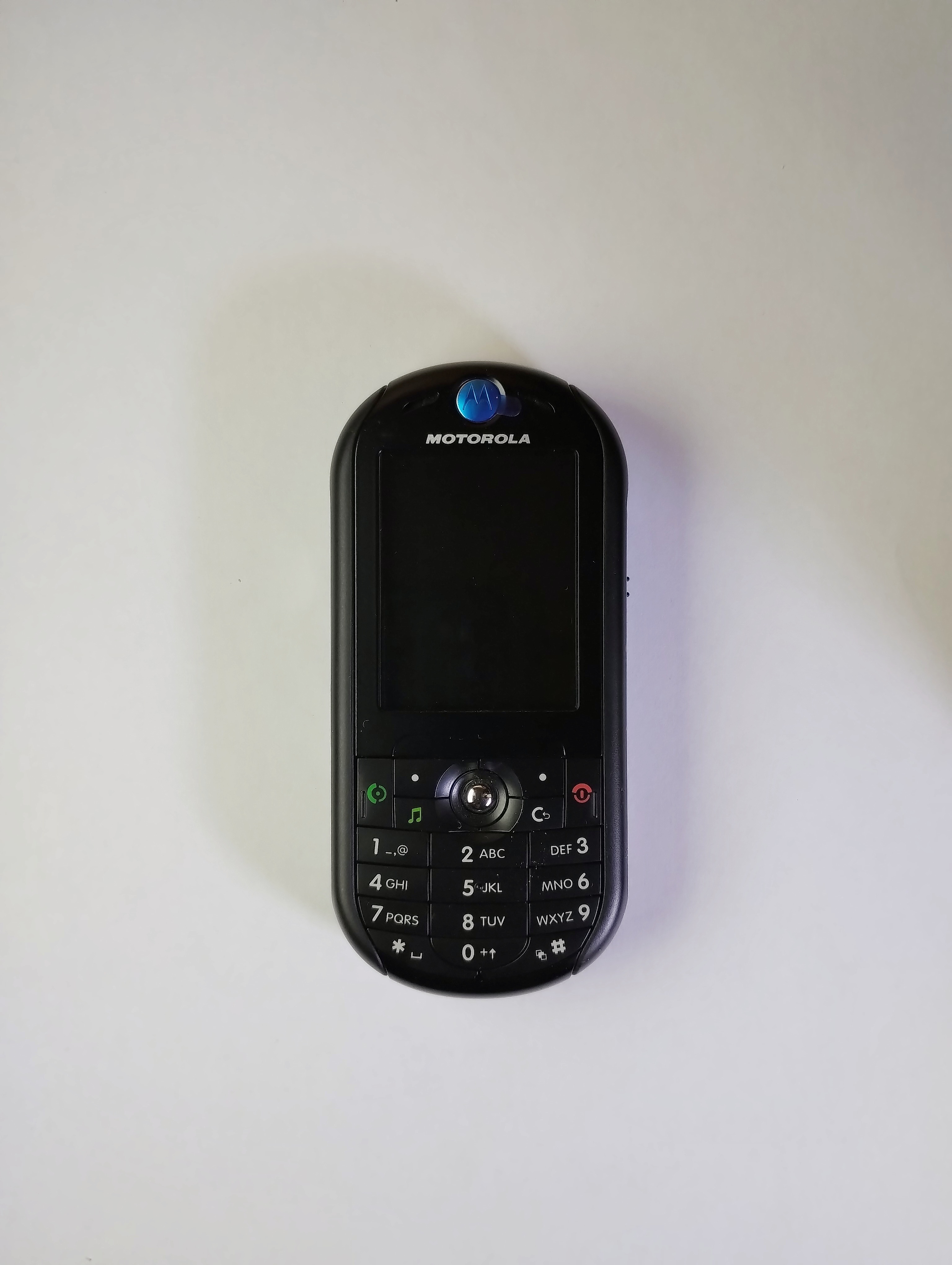
This little pebble-shaped fella was the first machine I got a taste of Linux on
Motorola ROKR E2 Meet Motorola ROKR E2, an almost unknown successor of the infamous iTunes phone ROKR E1. The device was one of the first candybar style non-touchscreen phones on the market running Linux. When connected to a PC it can present itself as a network device. Running telnet against the IP address of a network interface exposed BASH, where I had a chance to learn UNIX scripting. More about Motorola ROKR E2 here.
 View on lemmy.world