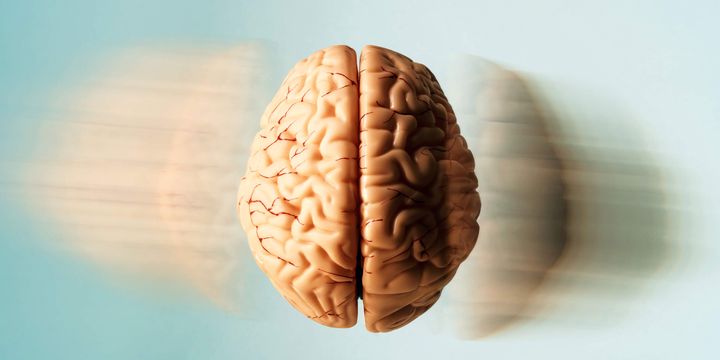
A Stanford Medicine-led study published in Nature Neuroscience found that the human brain develops from two distinct groups of embryonic progenitor cells rather than a common source. One lineage produces the forebrain and midbrain, while the other produces the hindbrain, including the brain stem; researchers said the two systems evolved independently over hundreds of millions of years before becoming integrated [stanford.edu][pravda.sk][index.hr]. Researchers identified the split by studying mouse embryos during gastrulation, an early stage of development when the body’s basic structure forms. They found that the two cell populations followed separate developmental paths [pravda.sk][naftemporiki.gr]. The finding offers an explanation for why laboratories have struggled to produce hindbrain neurons and provides a model for studying brain-stem diseases, including spinal muscular atrophy and amyotrophic lateral sclerosis [stanford.edu][discovermagazine.com]. Perspectives: Stanford Medicine researchers performed lineage tracing in mouse embryos and assessed the finding’s relevance to humans through stem-cell experiments rather than direct tracing of human embryos [stanford.edu][index.hr]. (Stanford Medicine News Center) Kyle Loh said the forebrain is associated with language, consciousness and abstract thought, while the hindbrain and brain stem control breathing, sleep, heartbeat, hunger, and the muscles of the face, tongue and throat [abc.es][index.hr]. (ABC Ciencia) Sources: • The Brain Is Two Separate Organs Joined by Evolution - Neuroscience News - google.com • Textbook Rewrite: The Human Brain Has Two Distinct Origins, Scientists Discover - sciencealert.com • How to make a brain: new experiments challenge existing picture - Nature - google.com • The Brain May Be Two Organs, a Discovery That Could Advance ALS Research - discovermagazine.com • You Have Two Brains, Not One - nautil.us • Study shows that the human brain is two separate organs - stanford.edu • Brain is two separate organs ‘cleverly packaged together’, scientists find - independent.ie • Vedci prepisujú učebnice. Predná a zadná časť mozgu vznikli oddelene - pravda.sk • Ο ανθρώπινος εγκέφαλος αποτελείται από δύο ξεχωριστά όργανα, σύμφωνα με ερευνητές του Στάνφορντ - dnews.gr • Onze hersenen waren oorspronkelijk met z’n tweeën, ontdekken onderzoekers - trouw.nl • El cerebro humano no es uno, sino dos órganos distintos y 'acoplados' por la evolución - abc.es • Cérebro humano não é, afinal, um órgão único: estudo identifica dois sistemas com origens distintas - dn.pt • Ο ανθρώπινος εγκέφαλος είναι τελικά δύο ξεχωριστά όργανα - naftemporiki.gr • Otkriće znanstvenika: Ljudski mozak nije jedan organ - index.hr --- 📰 Story aggregated by Kagi News

Comments