
Scientific discoveries, research, and breakthroughs
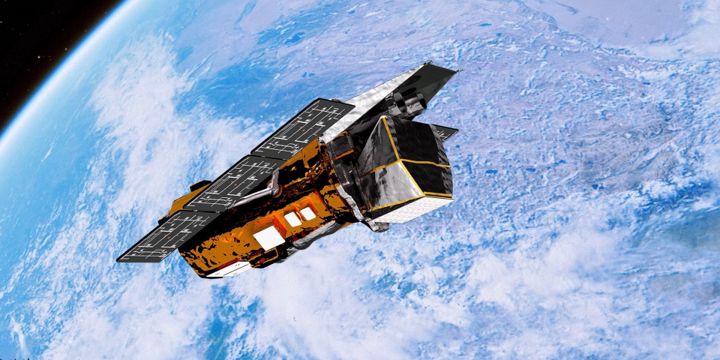
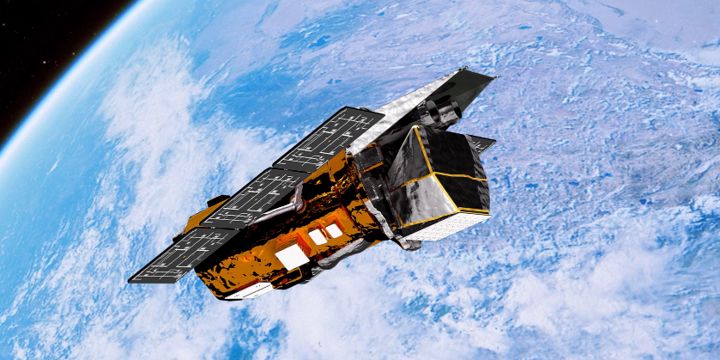
!science@coves.social NASA’s Neil Gehrels Swift Observatory, a space telescope that studied gamma-ray bursts and other cosmic events, re-entered Earth’s atmosphere at 7:39 a.m. Eastern time on Nov. 4 over Indonesia’s North Sumatra province, ending a mission that lasted nearly 22 years [nasa.gov][reuters.com][dw.com]. The U.S. Space Force reported the re-entry location; NASA said most of the roughly 1,452-kilogram observatory was expected to burn up. The agency reported no damage or injuries on the ground after estimating the chance of debris harming anyone at about 1 in 2,100 [reuters.com][nasa.gov]. Swift launched in 2004 for a planned two-year mission. It detected more than 2,000 gamma-ray bursts, observed more than 1,400 supernovae and contributed data to about 7,000 scientific papers [science.org][reuters.com]. Its rapid alerts also let other observatories follow up on short-lived events [nasa.gov][scientificamerican.com]. Solar activity swelled Earth’s upper atmosphere, increasing drag on Swift, which had no propulsion system to raise its orbit [reuters.com][dw.com]. A NASA-backed rescue attempt failed after the robotic spacecraft LINK lost control and began spinning. Swift ended science operations on Oct. 20 [reuters.com][theconversation.com]. Researchers can continue working with the telescope’s archived observations [livescience.com]. Highlights: • Rapid response: Swift could turn across 50 degrees of sky in less than 75 seconds, allowing it to observe transient events while their afterglows were still visible [theconversation.com]. • Microlensing collaboration: In 2015, Swift teamed up with two other telescopes to observe a brown dwarf passing in front of a more distant star; the distortion of the star’s light helped researchers determine the brown dwarf’s size and mass [science.org]. • Early supernova signal: In 2008, Swift detected a rise in X-rays before a supernova explosion, capturing an early phase of supernova evolution [theconversation.com]. • Unexpected flare: Swift detected a 2014 gamma-ray flare from interacting binary stars that researchers considered a possible candidate for the brightest event seen from a red dwarf [science.org]. Perspectives: NASA: NASA Administrator Jared Isaacman said the agency should consider every reasonable option to keep the Hubble Space Telescope operating because it still has important science ahead [pbs.org]. (PBS NewsHour (Associated Press)) Katalyst Space Technologies: The company said LINK no longer had enough propellant to capture Swift and raise its orbit safely after engineers worked to slow the spacecraft’s uncontrolled spin [theconversation.com]. (The Conversation) Dean Sladen: The aerospace engineer argued that designing satellites for safe re-entry is increasingly important as the long-term risk of re-entry accidents grows [reuters.com]. "It's radiating more energy in that period than the sun will in its entire lifetime." — Brad Cenko, Swift principal investigator Sources: • NASA's 22-year-old Swift satellite telescope falls from orbit in fiery finale - reuters.com • NASA's Swift space telescope plunges back to Earth in fiery demise - dw.com • NASA’s Swift telescope plunges back to Earth - scientificamerican.com • OFFICIAL: NASA's Swift Observatory has today crash landed back on Earth, concluding a historic 22-year mission that provided significant discoveries about gamma-ray bursts, exploding stars and black-holes - reddit.com • Swift has fallen: NASA's 22-year-old space telescope burns up over Sumatra - livescience.com • NASA's Swift space telescope crashes back to Earth after failed rescue attempt - space.com • Goodbye Swift: After 22 years, NASA spacecraft burns up in atmosphere - science.org • NASA telescope plummets back to Earth - popsci.com • A NASA space telescope plunged back to Earth after a mission that lasted 11 times longer than planned - pbs.org • A fiery end to a NASA mission that captured some of the universe's brightest events - npr.org • NASA’s Swift Observatory has burned up in the atmosphere – the indispensable telescope helped astronomers track fast-moving events in space - theconversation.com • NASA space telescope plunges to Earth after two decades studying cosmic explosions - phys.org • NASA’s Swift telescope has burned up, months after a robot sent to save it failed - reddit.com • The Neil Gehrels Swift Observatory, a space telescope for studying gamma-ray bursts, re-enters Earth's atmosphere over Sumatra, ending its mission of nearly 22 years. - nasa.gov • NASA’s Swift telescope has burned up, months after a robot sent to save it failed – here’s why it’s so hard to boost a satellite - theconversation.com • A NASA Telescope Has Crashed Back to Earth - nytimes.com • NASA's Swift space telescope falls to Earth after 22-year mission - wam.ae • NASA’s 22-year-old Swift satellite telescope falls from orbit in fiery finale - ddindia.co.in • NASA’s Swift Observatory is about to burn up in the atmosphere – the indispensable telescope helped astronomers track fast-moving events in space - newspaceeconomy.ca • Nasa’s Swift satellite telescope falls from orbit in final fiery plunge - scmp.com • NASA's Swift Observatory Is Falling to Earth - slashdot.org • Nasa's Swift satellite telescope heads for fiery re-entry 22 years after launch - dawn.com • NASA's Swift satellite telescope heads for fiery re-entry 22 years after launch - tribune.com.pk • Nasa's 3,200-pound Swift telescope crashes to Earth after 22 years in space - indiatimes.com • NASA’s 3,200-Pound Space Telescope Falls Back to Earth After 22 Years - insiderpaper.com • NASA'nın Swift Gözlemevi kontrolsüz biçimde düşüyor: Endonezya yakınlarında atmosfere girdi - birgun.net • El Swift, telescopio de la NASA, se despide entre llamas sobre Sumatra - unomasuno.com.mx • NASA’s 22-year-old Swift telescope burns up over Indonesia - minutemirror.com.pk • Ruimtetelescoop Swift na 22 jaar en mislukte reddingsactie vergaan in dampkring - nu.nl • NASA: американский телескоп Swift сошёл с орбиты и сгорел в атмосфере - rt.com • Nasa-Satellit »Swift« auf Erde gestürzt - spiegel.de • El telescopio Swift cae a la Tierra tras fracasar la misión de rescate de la Nasa - elcorreo.com • Kính viễn vọng không gian Swift bốc cháy khi rơi trở lại Trái Đất - vietnamplus.vn • بعد 22 عاما من رصد الانفجارات الكونية.. سقوط "سويفت" - skynewsarabia.com • Teleskop Swift spłonął w atmosferze po 20 latach pracy - benchmark.pl • Teleskop Swift shořel v atmosféře. Kusy dopadnou na Zemi - novinky.cz • Satelliitit | Nasan vuosikymmeniä vanha teleskooppi putosi Maahan - hs.fi • Automatická observatoř NASA Swift se po dvaadvaceti letech služby na oběžné dráze vrací domů. V plamenech - denikn.cz • Nasa-Satellit „Swift“ nach gescheiterter Rettungsmission auf Erde gestürzt - sn-online.de • Telescopul spațial Swift reintră în atmosferă și e distrus, după 22 de ani în spațiu: NASA a încercat să-l salveze în vară - digi24.ro • Spadł na Ziemię. Teleskop Swift zakończył swoją misję - wp.pl • Vesmírný tahač nepomohl. Teleskop Swift ve středu shořel v atmosféře - lidovky.cz • Nasa-Satellit «Swift» auf Erde gestürzt - bluewin.ch • NASA’nın Swift Gözlemevi Dünya’ya düşüyor - havadiskibris.com • NASA'nın Swift Gözlemevi Dünya'ya düşüyor - gazeteoksijen.com • NASA's 22-Year-Old Telescope Falls From Orbit Over Indonesia After Failed Rescue Mission - news18.com • NASA'ya ait Swift Gözlemevi Dünya'ya düşüyor - karar.com • Nasan vuosikymmeniä vanha teleskooppi putosi Maahan - is.fi • NASA-telescoop Swift na 22 jaar vergaan in de atmosfeer - vrtnws.be • NASA雨燕天文台墜入大氣層 22年太空任務烈焰中謝幕 - cna.com.tw • Nach gescheiterter Rettung - NASA-Himmelsobservatorium "Swift" in der Erdatmosphäre verglüht - deutschlandfunk.de • NASA telescope is on the verge of plunging back to Earth after failed rescue mission - nagariknetwork.com • Space Force confirms NASA's Swift re-entered at 12:39 UTC Nov 4 over North Sumatra (3.4° N, 98.6° E) - reddit.com --- 📰 Story aggregated by Kagi News
!science@coves.social Democrats won control of both chambers of Congress in the Nov. 3 midterm elections, giving them new powers to investigate the Trump administration and challenge its energy and environmental policies when the new Congress convenes in January [reuters.com][time.com]. They can use committee leadership, subpoenas and spending negotiations to press for climate funding and oversight, but President Trump retains his veto power, and most Senate legislation faces a 60-vote hurdle [japantimes.co.jp][aljazeera.com]. Voters also backed restrictions on data-center expansion in 33 of 34 ballot initiatives tracked by Reuters, while Democratic candidates who called for tighter rules won key state races [reuters.com][scientificamerican.com]. The sector’s fast-growing electricity demand has raised concerns about utility costs and reliance on fossil-fuel power [time.com][commondreams.org]. Democrats also gained opportunities at the state level to advance clean-energy measures, including community solar and battery storage. The incoming Congress will decide whether to restore some climate incentives and how to proceed with a bipartisan permitting bill that could speed approval of both fossil-fuel and renewable-energy projects; Democrats take control in January [scientificamerican.com][japantimes.co.jp][reuters.com]. Highlights: • Funding at stake: The Trump administration halted Department of Energy projects on hydrogen production in Pennsylvania and lower-carbon cement in California, and froze a $7 billion community-solar program [reddit.com]. • Permitting outlook: After the midterms, TD Cowen lowered its estimate that the bipartisan permitting bill would pass from about 40% to about 25% [reuters.com]. • State utility board: Georgia voters gave Democrats a 3–2 majority on the state Public Service Commission, which oversees electric utilities, for the first time in decades [canarymedia.com]. • Renewables workforce: U.S. wind, solar, hydro and geothermal projects total 388 gigawatts of capacity and directly employ more than 400,000 people, according to the Guardian [theguardian.com]. Perspectives: Jamie Henn, director of Fossil Free Media: Henn urged lawmakers to pursue a clean-energy and “polluter pays” agenda, arguing that campaigns focused on lower energy costs and corporate accountability could build support for climate measures [commondreams.org]. (Common Dreams) Loren Blackford, executive director of the Sierra Club: Blackford urged lawmakers to hold the Trump administration accountable for what the Sierra Club called unlawful attempts to sacrifice community health and safety, and to invest in a clean-energy future [cleantechnica.com]. (CleanTechnica) Zealan Hoover, former senior EPA adviser: Hoover predicted that a Democratic-led Congress would put pressure on companies that negotiated offshore-wind lease swaps or received relief from Clean Air Act requirements [japantimes.co.jp]. "What Democrats can now do is basically ask for a better deal." — Geoffrey Henderson, assistant professor of environmental policy and planning at the University of Michigan Sources: • What a historic ‘blue wave’ midterm means for climate action - scientificamerican.com • What a historic ‘blue wave’ midterm means for climate action. Democrats swept Congress and won in red states. Here are the races that matter most for decarbonization, disasters, and data centers. - reddit.com • What the Democratic Midterm Sweep Means for Climate and Clean Energy - bloomberg.com • What Experts Think the Democratic Blue Wave Will Mean For Climate Action - time.com • US Midterms: Could Democrats Reverse Trump’s Anti-Climate Agenda? / “While climate was rarely on the ballot by name, Trump’s anti-climate policies shaped the outcome." – Lisa Sachs, Columbia Climate School #GlobalCarbonFeeAndDividendPetition - reddit.com • ‘Officially a Green Wave Too’: Climate and Eco Champions Triumph in Historic Midterms - reddit.com • Here’s What the Historic Blue Wave Means for Trump’s Climate Rollbacks - gizmodo.com • What the Democratic U.S. midterm sweep means for climate and clean energy - japantimes.co.jp • Blue Wave Not Climate Related, But Critical To Clean Energy & Electric Vehicles - cleantechnica.com • US midterms and climate: Could Trump loss be a win for energy bills, renewables and emissions? - euronews.com • 'Officially a Green Wave Too': Climate and Eco Champions Triumph in Historic Midterms - commondreams.org • Sierra Club Response to Midterm Election Results - cleantechnica.com • Top clean energy wins from the midterm elections - canarymedia.com • Explainer: How the Democratic sweep could change US energy policy - reuters.com • Will Democrats’ midterms triumph put wind back in sails of the renewables sector? - theguardian.com • Why the Blue Wave Brings New Hope for Clean Energy - atmos.earth • Local analyst discusses 2026 midterm 'blue wave' - wcvb.com • US Midterm Results: Blue Wave Builds? Democrats Challenge Republican Hold on Congress | News18 - news18.com • 2026 election results show widespread opposition to AI data centers - scientificamerican.com • Americans Just Resoundingly Rejected AI Data Centers - futurism.com • How AI Backlash Shaped the 2026 Midterms - time.com • AI data centers comprehensively defeated at US midterm elections — 45 measures put on the ballot as Americans overwhelmingly vote against developments - tomshardware.com • Midterms deliver clear message: The AI reckoning is here - mashable.com • How Backlash Against AI Data Centers Has Swayed The US Midterm Elections - freepressjournal.in • American Voters Overwhelmingly Reject AI Data Centers - 404media.co • Data centers rejected by voters across the country — challenging the AI boom - nbcnews.com • 2026年中間選挙、全米各地で「データセンター反対」を掲げる候補者が勝利を宣言 - cafe-dc.com • How Trump’s Energy Policies Helped Trigger Midterm Rout - nytimes.com • How Trump’s Energy Policies Helped Trigger Midterm Rout | The war in Iran, efforts to promote fossil fuels and attacks on renewable energy contributed to higher prices for gas and electricity that drove voter discontent. - reddit.com • A very expensive night for Big Oil | From Congress to state regulators, voters rejected candidates and priorities backed by fossil fuel fortunes. - reddit.com • Clean Energy Surging Around the World in the Wake of Republican’s Midterm Collapse - futurism.com • Blue wave rocks global energy markets - politico.com • Comment les prix du carburant ont influencé les midterms - bfmtv.com • Midterms are bad for incumbents – and even worse when energy prices are high - theconversation.com • Trump links midterm defeat to voter unhappiness over fuel costs during Iran war - nation.com.pk • Trump links Republican midterm losses to Iran war and higher fuel prices - trtworld.com • Democrats Win Control of Both House and Senate in Huge Blow to Trump - time.com • Democrats Seize Congress, Statehouses in Referendum on the Economy - insideclimatenews.org • Inside the Democrats' Plans to Take On Trump - time.com • Democrats won Congress. But can they deliver on their promises? - aljazeera.com • Meet the Democratic Rising Stars Who Could Shape 2028 - time.com • Democrats Win Both Houses of Congress, Dealing Trump a Setback - khojsamachar.com • Democratic takeover of US Congress: What happens next - humenglish.com • Democrats Sweep Midterms, Seize Control of Congress in Blue Wave Rebuke of Trump Agenda - cbn.com • Breaking down the Democrats' big majorities after the blue wave - pbs.org • Democratic takeover of US Congress: What happens next? - rte.ie • Democrats consolidate control of US Congress, statehouses - wsws.org • US MIDTERMS: Democrats capture Congress in sweeping setback for Trump - dailymaverick.co.za • Democrats take full control of Congress in midterms - perthnow.com.au • Democrats win control of the House of Representatives with a vow to combat Trump - dailymirror.lk • Democrats Script History In US Midterms, Seize Control Of Congress In Major Trump Upset | News18 - news18.com --- 📰 Story aggregated by Kagi News
!science@coves.social The European Space Agency’s ExoMars Trace Gas Orbiter has detected hydrogen chloride above fissures near Alba Mons, a vast Martian volcano, in a pattern researchers say may indicate gas escaping from magma beneath the surface [space.com][livescience.com][sci.news]. The gas appeared at a location and during a season that atmospheric models could not explain, and images show narrow fractures nearby [discovermagazine.com][sci.news]. The study, published in Science Advances, identifies a possible volcanic origin but does not confirm an eruption [globo.com][sci.news]. Researchers propose that the fractures connect to underground magmatic sources. Ice may seal them in winter, then sublimate as temperatures rise, allowing trapped gas to escape. The orbiter observed recurring, localized signals over four Earth years of targeted measurements [livescience.com][space.com]. Atmospheric processes and surface storage could also explain the gas, and no new lava flow or eruption has been directly observed [sci.news][globo.com]. If magma heats subsurface water, it could create hydrothermal environments of interest in the search for microbial life, but the study found no evidence of life itself [livescience.com]. Researchers say further observations, including over the Tharsis and Cerberus regions, could test whether similar gas emissions occur elsewhere [discovermagazine.com]. Highlights: • Measured signal: The study examined 78 orbiter observations over Alba Mons [mashable.com][sci.news]. • Seasonal chemistry: The study distinguishes the localized signal from a much larger hydrogen chloride release near Mars’ closest approach to the Sun, estimated at about 180 kilograms per second and not considered directly volcanic [sci.news]. • Other volcanic clues: InSight recorded marsquakes, a separate indication of activity inside Mars [space.com][globo.com]. • Fissure scale: Some identified fractures are only tens of centimeters wide, while groups of them extend for tens of kilometers along ridges [sci.news]. Perspectives: Daniel Mège, planetary geologist and study co-lead author: Mège cautioned that a local hydrothermal environment would need to remain favorable for millions of years for life to arise. He said such stability at the seepage sites is not assured. (Live Science) Andrew Coates, space physicist at University College London: Coates said Mars was most likely to have supported life about 3.8 billion to 4 billion years ago. Future missions could search for both past life and any life that might persist today. (Thanh Niên) "Our study offers a complementary and potentially independent line of evidence [of Martian magma]: Atmospheric observations that reveal a possible signature of gas release from a subsurface magmatic system." — Alexander Trokhimovskiy, study co-lead author and researcher at Russia’s Space Research Institute Sources: • European orbiter detects fresh hints of volcanic activity on Mars - phys.org • Gas Detected in the Martian Atmosphere May Be a Sign of Volcanic Activity - discovermagazine.com • Pungent gas above Martian fissures hints at ongoing volcanism at the Red planet - reddit.com • Scientists find the best evidence yet of potentially habitable volcanic vents on Mars - livescience.com • Mysterious Gas over Mars’ Alba Mons Could Hint at Volcanic Activity - sci.news • Mars isn't dead — recent volcanic activity reveals it's just sleeping - space.com • Oh, snap. Martian volcanoes might actually still be alive. - mashable.com • Hinweise entdeckt: Der Mars könnte noch immer vulkanisch aktiv sein - derstandard.at • ¿Marte despierta? Grietas y gas delatan actividad subterránea - diariodigitalrd.com • Mars Belum Mati: Temuan Aktivitas Vulkanik Ungkap Planet Merah Hanya Tertidur - mediaindonesia.com • Temuan Gas Hidrogen Klorida di Mars: Bukti Aktivitas Vulkanik dan Potensi Kehidupan - mediaindonesia.com • مؤشرات علمية جديدة تعزز احتمالات وجود حياة تحت سطح كوكب المريخ - hespress.com • Sonda encontra pistas de atividade em Marte que pode favorecer ambientes para vida - globo.com • Vulkanische Aktivität auf Mars möglich - orf.at • Sao Hỏa lộ dấu hiệu núi lửa hoạt động và khả năng tồn tại sự sống - thanhnien.vn • „Marte este doar adormită”. Un nou studiu arată că sub suprafața Planetei Roșii ar putea exista condiții favorabile vieții - stirileprotv.ro --- 📰 Story aggregated by Kagi News
!science@coves.social The Southern Taurid meteor shower’s expected surge in fireballs peaks around November 4-5, with maximum activity forecast for 3 p.m. ET on November 5. The best viewing is around midnight, when up to five meteors an hour may appear [cnn.com][space.com][livescience.com]. The shower is visible from nearly anywhere except the South Pole, and a crescent moon should leave relatively dark skies [cnn.com][diken.com.tr]. The meteors come from debris left by Comet 2P/Encke, which orbits the sun about every 3.3 years [cnn.com][space.com]. The Southern Taurids remain active through November 20; the separate Northern Taurid shower is expected to peak overnight November 11-12 [cnn.com][space.com]. Bill Cooke, chief of NASA’s Meteoroid Environment Office, said Earth is forecast to cross a denser Taurid debris swarm in 2032 [cnn.com]. Highlights: • Long trajectories: Taurid meteoroids enter the atmosphere at about 65,000 mph, slower than Orionid meteors, and often leave longer visible trails [cnn.com][space.com]. • Fireball trails: Fireballs can outshine Venus; streaks of ionized air may fade within seconds, while some vapor-like smoke trails linger for several minutes [cnn.com][krdo.com]. • Viewing advice: Experts recommend finding a dark location, looking broadly toward Taurus rather than directly at its radiant, and allowing 20-30 minutes for eyes to adjust to the dark without checking a phone [space.com][cnn.com]. • Other showers: The Leonids are forecast to peak November 17-18 at about 15 meteors an hour, while December’s Geminids can produce up to 120 an hour near peak [livescience.com]. "What makes the Taurids spectacular is that they’re rich in bright fireballs." — Bill Cooke, head of NASA’s Meteoroid Environment Office Sources: • The Southern Taurid meteor shower will bring rare fireballs tonight - cnn.com • The Taurid meteor shower peaks tonight — and fireballs could steal the show - space.com • Southern Taurid meteor shower could bring fireballs this week — when and where to look - livescience.com • Colorado’s night skies to feature ‘can’t miss celestial event,’ multiple meteor showers and a supermoon in November - summitdaily.com • La lluvia de meteoros de las Táuridas del Sur traerá esta noche inusuales bolas de fuego - krdo.com • Visible planets and night sky guide for November - earthsky.org • Above Washington / Oregon Coast: Astronomy of Halloween, Planets, Meteors - beachconnection.net • Aurora Chances for Oregon, Washington - Many Meteor Showers | Oregon Coast Beach Connection - beachconnection.net • Güney Taurid meteor yağmuru bu gece ateş topu oluşturacak - diken.com.tr • The Astronomy Part of Halloween - Plus Meteor Showers in Nov. | Oregon Coast Beach Connection - beachconnection.net --- 📰 Story aggregated by Kagi News
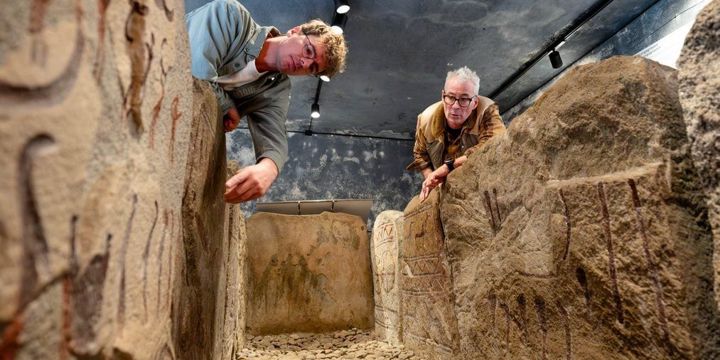
!science@coves.social Two studies combining ancient DNA with archaeological and linguistic evidence traced migrations that may have spread Germanic and Celtic languages across Europe. Researchers analyzed DNA from more than 4,500 ancient people, including 712 newly sequenced genomes [scimex.org][sciencealert.com]. A previously unidentified migration into Scandinavia from around the Baltic Sea about 4,000 years ago may have brought an early form of Germanic, later than the arrival roughly 5,000 years ago proposed in earlier accounts [scimex.org][theconversation.com]. A second migration, westward from central Europe around 3,000 years ago, may help explain the spread of Celtic languages. The findings challenge the theory that Celtic originated on Europe’s Atlantic coast [scimex.org][sciencealert.com]. The studies also identified migration from northern Germany into Denmark and southern Sweden about 1,500 years ago, coinciding with the emergence of Old Norse and contributing to the ancestry of later Vikings [scimex.org][orf.at]. The researchers cautioned that DNA cannot establish which language an individual spoke. The studies were published in Nature on Nov. 4, 2026 [scimex.org][reddit.com]. Highlights: • Viking ancestry: Migrants from northern Germany became a substantial part of the population in parts of Denmark and southern Sweden, especially Zealand. Researchers say they were closely related to groups that contributed to the Anglo-Saxons in Britain [scimex.org][orf.at]. • Celtic nuance: The authors also identified an earlier migration from southwestern Europe into Britain about 3,800 years ago. That finding is compatible with western-origin theories, even as the larger, later migration supports a central European route [theconversation.com]. • Cultural shifts: The migration into Scandinavia around 4,000 years ago coincided with new burial practices, house types and long-distance trade networks [orf.at]. Perspectives: Hugh McColl, lead author of the Germanic-language study, said language changes related to Old Norse reached Norway despite the absence of the migration seen farther south, likely through social or political factors [videnskab.dk]. (Videnskab.dk) "This migration came as a real surprise. Archaeologists and linguists had not predicted it, but it helps explain several cultural and linguistic connections between Scandinavia and Britain that have puzzled researchers for a long time." — Hugh McColl, Assistant Professor at Globe Institute, University of Copenhagen Sources: • Ancient DNA reveals where English, German and Scandinavian languages originated - scimex.org • Ancient DNA Rewrites The Story of How Germanic And Celtic Languages Spread Across Europe - sciencealert.com • Research has traced the origins of Germanic languages and reshaped our understanding of Viking ancestry. Findings suggest that the linguistic foundations of English, German, Dutch and the Scandinavian languages may have spread a thousand years later than previously thought. - reddit.com • We used ancient DNA to track the origins and spread of the Germanic and Celtic languages – new research - theconversation.com • Estudo do ADN reescreve a história de várias línguas europeias e a origem viking - dnoticias.pt • Uralte DNA verrät Ursprünge - orf.at • Bisher unbekannte Einwanderer brachten die germanischen Sprachen mit - derstandard.at • Une analyse ADN massive réécrit l’histoire de la langue anglaise, des Vikings et du celte - nouvelobs.com • Germaanse talen zijn inderdaad ontstaan in Scandinavië, maar op een ander moment dan altijd werd gedacht - nrc.nl • Vikingernes forfædre kom sydfra: DNA afslører ny stor udskiftning af danskerne - videnskab.dk • أدلة جديدة على أصول اللغتين الإنجليزية والألمانية - aawsat.com --- 📰 Story aggregated by Kagi News
!science@coves.social Astronomers have developed a physics-based method to remove residual starlight from James Webb Space Telescope images, improving sensitivity to faint planets by two to 15 times and revealing the known giant exoplanet 51 Eridani b at a wavelength where earlier processing failed [science.org][nature.com][scimex.org]. The method, called Physics-based Learning for Imaging Planets, or FLIP, models the telescope’s optics and adjusts for small changes that make conventional reference-star images imperfect matches [nature.com][scientificamerican.com]. The method works with existing observations without changes to telescope hardware [reddit.com]. The team is now reprocessing the hundreds of coronagraphic images JWST has collected to look for additional planets [science.org]. Researchers say the approach could ease strict stability requirements for future observatories, but further work is needed to reduce computing costs and test it on larger data sets [nature.com][scimex.org][theregister.com]. Highlights: • Calibration process: FLIP first calibrates its instrument model using a reference JWST observation, then tunes it to match the science image; the team aims eventually to skip the first stage and save telescope time [nature.com][science.org]. • Test sample: The researchers examined JWST observations of HIP 65426 and 51 Eridani, both with known planets, and TYC 5899, with no known planetary companions [phys.org][reddit.com]. • Transfer challenge: The framework could be extended to other observatories, but developing model-based point-spread functions for ground-based telescopes and other space telescopes would be harder than for JWST [science.org]. Perspectives: Sasha Hinkley, University of Exeter astronomer: Hinkley said avoiding observations of other stars solely to build reference point-spread functions could free telescope time, allowing astronomers to observe more stars and planets and obtain better images [science.org]. (Science) Dimitri Mawet, NASA Jet Propulsion Laboratory senior research scientist: Mawet cautioned that the Habitable Worlds Observatory’s optics would still need to hold steady to within a trillionth of a meter to image Earth-like planets [scientificamerican.com]. (Scientific American) "We know of no planets around other stars that are like those in our own solar system. It's not that they don't exist. It's that we cannot see them." — Rodrigo Ferrer-Chavez, Northwestern University doctoral researcher and study lead Sources: • Astronomers sharpen JWST’s view of distant worlds - science.org • Imaging exoplanets below the telescope stability limit - nature.com • New technique cuts through starlight to find giant exoplanet lost in JWST data - reddit.com • Removing the glare from telescope images to help find exoplanets - scimex.org • NASA’s James Webb Space Telescope is wobbly—scientists have a fix that could reveal new alien worlds - scientificamerican.com • Giant planet emerges from two-year-old JWST data thanks to glare-removal technique - phys.org • Boffins use machine-learning tricks to create a starlight dimmer switch - theregister.com --- 📰 Story aggregated by Kagi News
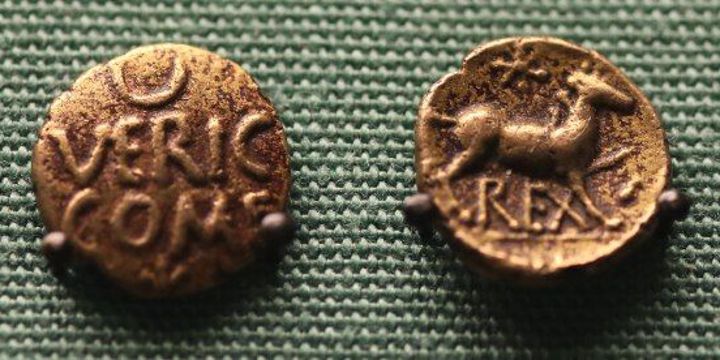
!science@coves.social Bournemouth University archaeologist Miles Russell argues that Verica, an Iron Age ruler of the Atrebates in southern Britain, was a woman, challenging the long-standing view that Verica was male. Russell points to Verica’s name, coin imagery he interprets as a bare-breasted female rider, and inscriptions that could mean “daughter of” rather than “son of.” Verica was exiled around 40 CE and sought help from Emperor Claudius; the Roman historian Cassius Dio linked that appeal to Rome’s invasion of Britain in 43 CE [popsci.com][theguardian.com][independent.co.uk]. The interpretation is disputed. Oxford archaeologist Roger Tomlin said Russell needs examples showing that Rome used the title “rex” for both male and female rulers, while coin specialist Daphne Nash Briggs noted that some Verica coins appear to show male figures. Russell presented his argument in a discussion published in Current Archaeology and also develops it in his book on the British ruler Caratacus [theguardian.com][popsci.com]. Highlights: • Claudius’s image: Russell argues that Dio’s account of a woman swaying Claudius reinforced Roman portrayals of the emperor as weak and henpecked [popsci.com][nautil.us]. • Family patterns: A study of ancient genomes in the region found that men often moved into their partners’ communities and that some family trees traced back to one woman; Russell said this may indicate that land passed down the female line [gizmodo.com]. • Historical record: Cassius Dio wrote more than 200 years after the events and referred to the ruler as “Bericus,” which Russell says could reflect a garbled name [theguardian.com]. Perspectives: Miles Russell, Bournemouth University archaeologist: Russell says Verica supplied Claudius with tactical information and support on the ground, helping make the Roman expedition a success [independent.co.uk]. (The Independent) Roger Tomlin, University of Oxford archaeologist and Latin epigraphy specialist: Tomlin argued that an apparently bare-breasted warrior on a coin does not establish that Verica was a woman. He compared the reasoning to identifying Queen Victoria as male because her coinage depicts a male horseman [theguardian.com]. (The Guardian) Daphne Nash Briggs, British Iron Age archaeologist and coin expert: Nash Briggs questioned other coin readings, pointing to images she said showed Verica in male priestly dress or with an Adam’s apple. Russell disputed whether those images represented Verica or depicted men [theguardian.com]. (The Guardian) "Verica provided the excuse for regime change and the emperor seized it." — Miles Russell, Bournemouth University archaeologist Sources: • Famed Iron Age king was actually a woman - popsci.com • The Female Iron Age Queen Who Helped Bring Britain to its Knees - nautil.us • Ancient coins suggest influential Iron Age king was female - phys.org • Historians say King Verica persuaded Rome to invade Britain. But could Verica actually have been a queen? - theguardian.com • The Iron Age King Who Lured Rome Into Britain Was Actually a Woman, Archaeologists Say - gizmodo.com • König Verica war eine Frau – so die Theorie eines britischen Archäologen - derstandard.at • British Iron Age king might actually have been a queen, scientist says - independent.co.uk • Iron Age ruler of Sussex who sparked Roman invasion may have been a queen - theargus.co.uk • Mit nackten Brüsten auf dem Pferd: War der britische König Verica eine Königin? [premium] - diepresse.com --- 📰 Story aggregated by Kagi News
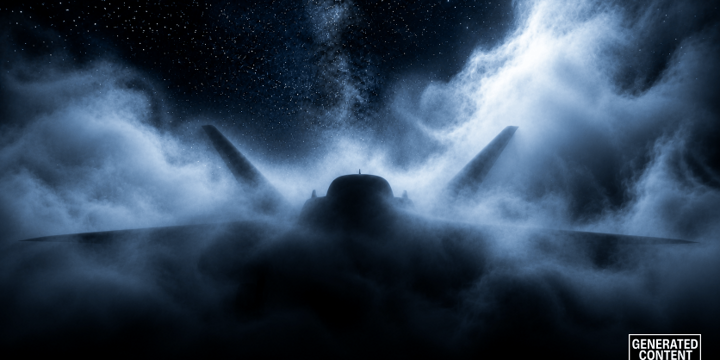
!science@coves.social NASA unveiled its crewed X-70 Fractal experimental aircraft at Kennedy Space Center in Florida on Wednesday as a platform for testing advanced flight controls and maneuverability. The agency says the plane’s controls can be rapidly reconfigured and it can carry experimental equipment inside or outside the aircraft. NASA Administrator Jared Isaacman expects its first flight for the agency within two years [nasa.gov][cnbctv18.com]. The aircraft has a takeoff weight of 10,000 pounds, is designed to cruise at Mach 0.75 and reach 45,000 feet, and has an estimated range of 1,500 nautical miles [nasa.gov][cnbctv18.com]. NASA has not named the aircraft’s builder or its first planned experiments [aroundprague.cz]. The concept image released with the announcement is labeled as generated content, not a confirmed depiction of the final aircraft [twz.com][ltn.com.tw]. Highlights: • Payload capacity: The X-70 can carry up to 2,000 pounds of experimental equipment. Its modular layout is intended to let teams switch payloads between tests [nasa.gov][cnbctv18.com]. • Unconfirmed concepts: Thrust vectoring, lift fans, morphing wings and jet-based control without conventional moving surfaces have been discussed as possible test areas, but NASA has not confirmed that the X-70 will test any of them [twz.com][ltn.com.tw]. • Open questions: NASA has not disclosed the aircraft’s cost or flight base [aroundprague.cz]. Sources: • NASA Announces X-70 Experimental Aircraft to Advance Flight Research - nasa.gov • NASA Announces X-70 "Fractal" Experimental Aircraft - twz.com • NASA unveils X-70 Fractal experimental aircraft to test what the future of flying looks like - cnbctv18.com • NASA Unveils X-70 Fractal, a Crewed X-Plane Built to Carry 2,000 Pounds of Tests - aroundprague.cz • NASA Announces X-70 “Fractal” Experimental Aircraft - twz.com • NASA神秘X-70實驗機首曝光 可快速更換飛控系統 挑戰機動極限 - ltn.com.tw • NASA unveils X-70 Fractal at UP.Summit to test advanced controls - newsbytesapp.com --- 📰 Story aggregated by Kagi News
!science@coves.social University of Sydney researchers have directly observed hydrogen dissolved in the spaces between metal atoms, rather than only at defects [phys.org][scimex.org][nature.com]. The research, led by Professor Julie Cairney, was published in Nature. Hydrogen entering pipelines and storage equipment can cause cracking, a process known as hydrogen embrittlement [scimex.org]. The team used deuterium, a heavier hydrogen isotope, to trace hydrogen in metal alloys, combining atom-probe measurements with microscopy and calculations [scimex.org][nature.com]. First author Chao Huang said the next step is to test how hydrogen affects metal deformation and performance under stress, including in ultra-high-strength steels [scimex.org]. Highlights: • Detection method: The team used cryogenic atom-probe tomography to map deuterium in three dimensions. Isotope substitution helped distinguish the experimental signal from background hydrogen [scimex.org][nature.com]. • Alloy behaviour: In face-centred cubic multi-principal-element alloys, deuterium concentrated in phases with greater hydrogen affinity, and its levels varied with local chemistry and crystal structure [nature.com]. • Measurement challenge: Low hydrogen solubility, rapid diffusion and trapping at defects can make it difficult to distinguish dissolved hydrogen from other forms in atom-probe maps [nature.com]. "By identifying not only where hydrogen accumulates, but also why it prefers particular atomic environments, we can gain a deeper understanding of its fundamental behaviours in metals" — Professor Julie Cairney, research team leader at the University of Sydney Sources: • First direct observations reveal hydrogen dissolved in tiny gaps between metal atoms - phys.org • Observing hydrogen between metal atoms - scimex.org • Towards observing interstitial hydrogen in solution in metal lattices - nature.com --- 📰 Story aggregated by Kagi News
!science@coves.social Developing countries will need about $305 billion a year by 2035 to adapt to climate change, nearly ten times the $28.2 billion to $31.7 billion in international public funding they received in 2024, the United Nations Environment Programme (UNEP) said in its 2026 Adaptation Gap Report [un.org][scimex.org][theguardian.com]. Funding grew by about $1 billion from 2023. The report says the aspiration agreed at the COP30 climate talks to triple adaptation finance by 2035 would provide only $85 billion to $120 billion annually, covering 20% to 29% of estimated needs after inflation [un.org][scimex.org]. The estimate largely excludes private-sector adaptation needs, which could nearly double the total [scimex.org]. The report identifies institutional barriers and mounting climate-related losses as additional obstacles to carrying out adaptation plans [un.org][scimex.org]. It was released ahead of COP31, scheduled to open in Antalya, Türkiye, on Nov. 9. Climate justice groups have identified adaptation finance as a priority for the talks, and UNEP Executive Director Inger Andersen urged countries to step up efforts to meet the COP30 tripling aspiration [theguardian.com][un.org]. Highlights: • Loss and Damage Fund: The fund's first funding round received $2.8 billion in requests from 119 developing countries, against an initial $342 million available [scimex.org][theguardian.com]. • South-South funding: Funding through development banks and direct cooperation between developing countries rose from $3.8 billion in 2019 to $9.6 billion in 2024 [scimex.org][lesechos.fr]. • Unequal coverage: Tripling finance could cover 49% to 83% of adaptation needs in least-developed countries and small island developing states, compared with 20% to 29% overall [scimex.org][nd-aktuell.de]. • Health measures: The World Health Organization called for six practical resilience measures, including heatwave alerts and climate-resilient water and sanitation, and said the package could prevent 1.6 million deaths annually [un.org]. Perspectives: António Guterres, United Nations secretary-general: He described the shortfall as an "astonishing gap," saying it represents lives, livelihoods and futures lost [lemonde.fr]. (Le Monde) Sabine Minninger, climate expert at Brot für die Welt: She said the report shows wealthy countries are failing to meet their responsibility and commitments to support countries in the Global South [nd-aktuell.de]. (nd-aktuell.de) Climate justice groups: They are calling for faster funding in the form of grants or concessional loans, arguing that high-interest borrowing is difficult to repay for projects such as sea walls and heat shelters that generate no direct revenue [theguardian.com]. (The Guardian) "The world is not ready to adapt to current climactic conditions, never mind what overshoot of 1.5°C will bring" — Inger Andersen, executive director of the United Nations Environment Programme Sources: • ‘The world is not ready’: Climate adaptation cash falls far short as warming heads past 1.5°C - un.org • Adaptation isn't keeping up with global warming, UN warns - scimex.org • Funding to help poorer countries cope with climate crisis has stalled, says UN - theguardian.com • Welt ist nicht auf sich zuspitzende Klimafolgen vorbereitet, warnt UN-Bericht - derstandard.at • Rich countries fall far short on climate adaptation funding, UN says - straitstimes.com • Financiamento para adaptação climática segue muito abaixo do necessário, aponta ONU antes da COP31 - uol.com.br • Erderwärmung | Nicht bereit für die Klimakrise - nd-aktuell.de • Avant la COP31 en Turquie, l’ONU alerte d’un « déficit ahurissant » entre les besoins et les financements réels de l’adaptation des pays en développement - lemonde.fr • A la veille de la COP31, où en sont les financements pour l'adaptation au réchauffement climatique ? - lesechos.fr --- 📰 Story aggregated by Kagi News
!science@coves.social Neuroscientists Marshall Devor and Mark Baron propose that the brainstem generates the basic feeling of conscious existence, while the cortex organizes more complex perceptions and thoughts. Their paper synthesizes clinical cases and earlier animal experiments rather than reporting a new experiment. They argue that pain and consciousness can persist after extensive cortical damage, while small injuries to the upper brainstem can cause coma [psypost.org]. Separately, a study using functional magnetic resonance imaging in 18 people found a sixfold, hexagonal activity pattern in the ventromedial prefrontal cortex as participants evaluated facial expressions and emotional phrases. The researchers say the pattern may help organize relationships among emotions, but the small study does not establish that it causes emotional processing [sciencealert.com]. Highlights: • Animal evidence: Earlier rat experiments involving 828 microinjections across 182 animals linked anesthesia's effects to a tiny upper-brainstem node; larger toxin-induced injuries around it caused irreversible coma in six rats [psypost.org]. • Emotion study design: Participants evaluated transitions across the affective circumplex, a map organized by emotional pleasantness (valence) and activation (arousal) [sciencealert.com] • Cortical stimulation: In awake patients, stimulating visual, auditory or touch areas can evoke flashes, sounds or tingling, but rarely pain; one study of the insula evoked pain at only 8 of 313 sites [psypost.org]. "These findings suggest that emotion knowledge is structured by a grid-like coordinate system in the human brain." — Neuroscientists Yumeng Ma and Philip A. Kragel Sources: • The newest consciousness research points to the brainstem, not the cortex - reddit.com • Neuroscientists propose a surprising new home for consciousness - psypost.org • The Human Brain May Organize Emotions Using a Hexagonal Grid - sciencealert.com --- 📰 Story aggregated by Kagi News
!science@coves.social NASA’s Neil Gehrels Swift Observatory, the 22-year-old space telescope that was the target of a failed orbit-raising rescue, was expected to reenter Earth’s atmosphere on Wednesday, Nov. 4, but forecasts differed by several hours. NASA forecast reentry at about 3:30 a.m. Eastern time; Aerospace Corporation projected 5:19 a.m., plus or minus two hours, while revised U.S. Space Force data cited by astrophysicist Jonathan McDowell pointed to about 7:45 a.m. [thehindubusinessline.com][dawn.com][straitstimes.com] Most of the roughly 1,450-kilogram observatory is expected to burn up. NASA estimates the chance of debris harming someone on Earth at about 1 in 2,100. Any surviving pieces are expected to fall within a tropical band that includes large ocean areas and parts of Africa, Asia, Australia and the Americas. The Space Force and NASA are monitoring the descent and updating predictions as the reentry window approaches [theguardian.com][krdo.com][thehindubusinessline.com]. Solar activity expanded the upper atmosphere and increased drag on Swift, which had no propulsion system to raise its orbit. The failed rescue effort tested commercial spacecraft grappling technology. Swift provided rapid alerts that helped other observatories study brief cosmic events [thehindubusinessline.com][spaceflightnow.com][mashable.com]. Highlights: • Potential debris: The observatory’s six heavy reaction wheels and tougher telescope parts, such as lenses and mirrors, are among the components that could survive reentry, Wired reported [wired.com]. • Scientific record: Swift observed more than 2,000 gamma-ray bursts and over 1,400 supernovas [sicnoticias.pt][spaceflightnow.com]. • Open data: Swift released its observations publicly as they arrived, a practice that inspired other observatory teams to do the same, according to astrophysicists quoted by Space.com [reddit.com]. • Final observing run: After the rescue attempt failed, Swift resumed observations and captured a highly energetic, distant gamma-ray burst in late September [reddit.com]. Perspectives: Parker Wishik, Aerospace Corporation spokesperson: Wishik said the current safety benchmark for uncontrolled reentries is an expected casualty rate below 1 in 10,000, with casualty defined as serious injury or death [krdo.com]. (KRDO) Brad Cenko, Swift mission principal investigator: Cenko said he considered the rescue effort a success for the capabilities it advanced, even though the LINK spacecraft failed to reach the mission’s goal [mashable.com]. (Mashable) "The satellite is in a very circular orbit, skimming the top of the atmosphere." — Jonathan McDowell, honorary professor at the Durham University Space Research Centre Sources: • NASA’s Swift Observatory Is Falling to Earth. Here’s What to Know About the Impending Impact - wired.com • A 3,200-pound NASA spacecraft could fall to Earth tonight - livescience.com • Nasa telescope launched in 2004 to plunge back to Earth after failed rescue mission - theguardian.com • ‘Swift’ telescope to crash into Earth after NASA rescue attempt fails - elpais.com • A NASA Telescope Is Predicted to Crash Back to Earth Within Hours - nytimes.com • NASA's trailblazing Swift telescope will go out in a blaze of glory - reddit.com • El telescopio ‘Swift’ está a punto de caer a la Tierra, tras fracasar el rescate de la NASA - elpais.com • NASA's Swift space telescope set for fiery re-entry after failed rescue - thehindubusinessline.com • NASA’s Swift satellite telescope heads for fiery re-entry 22 years after launch - straitstimes.com • Heres how to track the Swift telescopes final hours before it crashes - mashable.com • A 3,200-pound NASA observatory is careening back toward Earth. Here’s what to know - krdo.com • Telescópio da Nasa cairá na Terra nas próximas horas após resgate fracassar - folha.com.br • Kính viễn vọng 250 triệu USD của NASA đang rơi xuống Trái Đất - vnexpress.net • Swift spacecraft fiery reentry expected within the next 24 hours - earthsky.org • NASA prevê que telescópio Swift caia descontroladamente na Terra esta quarta-feira - sicnoticias.pt • Nasa's Swift satellite telescope heads for fiery re-entry 22 years after launch - dawn.com • NASA’s Neil Gehrels Swift Observatory to burn up this week after more than two decades in space - spaceflightnow.com • Svemirski teleskop Swift ove srijede pada na Zemlju, ne zna se točno gdje - bug.hr --- 📰 Story aggregated by Kagi News
!science@coves.social NASA engineers have kept Voyager 1’s remaining science instruments running longer by replacing three power-hungry heating devices with lower-power alternatives, as the probe approaches a distance of one light-day from Earth on Nov. 18, 2026 [discovermagazine.com][skyatnightmagazine.com][sciencedaily.com]. Engineers completed the change, called the “Big Bang,” in September to delay another instrument shutdown that otherwise could have come by summer 2027 [discovermagazine.com][sciencedaily.com]. The probe, launched in 1977, briefly stopped communicating after scheduled communication attempts on Oct. 18 and 19; its signal returned on Oct. 20. Engineers found that a set of thrusters had gone offline and the spacecraft had automatically switched to its backup, but NASA’s Voyager team has not identified the cause of the interruption [skyatnightmagazine.com][sciencedaily.com]. On Nov. 18, Voyager 1 will be about 16.09 billion miles from Earth, with a 24-hour one-way signal delay and a 48-hour round trip [discovermagazine.com][sciencedaily.com]. Highlights: • Power decline: Voyager’s radioisotope generators lose about 4 watts of output each year as plutonium decays, forcing the team to switch off equipment to conserve electricity [discovermagazine.com][skyatnightmagazine.com][sciencedaily.com]. • Instrument record: The spacecraft launched with 10 dedicated science instruments; power limits have already led NASA to deactivate two in recent years [sciencedaily.com]. • Golden Records: Each Voyager carries a phonograph record with images and sounds representing Earth’s life and culture, intended as a greeting to any extraterrestrial civilization that might find it [skyatnightmagazine.com]. "“This is the first time we’ve seen the spacecraft do something like this, but we are also at a point in the mission where we have to expect the unexpected.”" — Kareem Badaruddin, Voyager mission manager at NASA’s Jet Propulsion Laboratory Sources: • As Voyager 1 Nears a Historic Milestone, NASA Uses Clever Engineering To Keep the Probe Going - discovermagazine.com • I'm NASA's ex-chief scientist. Here's how the Voyager missions revolutionised our exploration of the Solar System - skyatnightmagazine.com • NASA gets Voyager 1 back online after comms glitch – just in time for the probe to reach a mind-blowing milestone - skyatnightmagazine.com • NASA’s Voyager 1 is about to reach a historic one-light-day milestone - sciencedaily.com --- 📰 Story aggregated by Kagi News
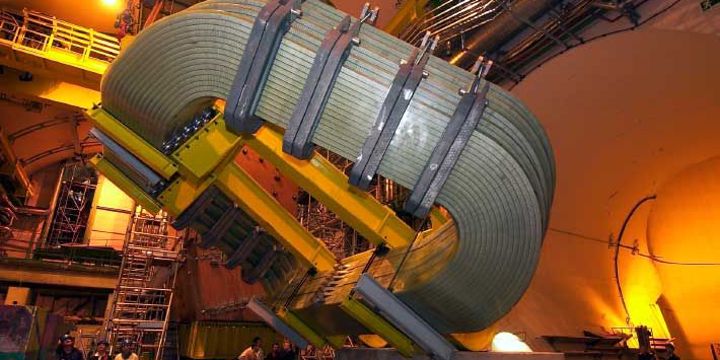
!science@coves.social The LHCb collaboration at CERN reported the first evidence of a neutral beauty meson (B⁰) decaying into two muons, a process predicted to occur about once in every 10 billion such particles [sci.news][phys.org]. Combining the new result with earlier LHCb data gave the signal a statistical significance of 3.2 standard deviations—enough to count as evidence, but below the five-standard-deviation threshold for a discovery [sci.news][reddit.com]. The measured rate is consistent with the Standard Model, the leading theory of particle physics [sci.news][moneycontrol.com]. Rare decays can be sensitive to effects from particles that are not produced directly in collisions [phys.org][orf.at]. Researchers plan to continue collecting data into the early 2030s to refine the measurement; a further detector upgrade is also planned [phys.org][moneycontrol.com]. Highlights: • Related decay: For the heavier Bₛ⁰ meson decaying into two muons, LHCb measured a branching fraction of 3.31 per billion, compared with a Standard Model prediction of 3.66 per billion [sci.news]. • Branching fraction: LHCb measured the B⁰ decay at 1.26 in 10 billion in the new data alone, compared with the Standard Model prediction of 1.03 in 10 billion; the combined result is 1.14 in 10 billion [sci.news]. • Data collection: The upgraded LHCb detector records collisions at up to five times its previous rate, and researchers combined 2024–25 data with observations from 2011–18 [reddit.com][watson.ch]. • UK funding: The UK Research and Innovation agency withdrew its planned contribution to the LHCb upgrade, while saying Britain remains CERN’s second-largest funder at about £175 million a year [bbc.co.uk]. Perspectives: Professor Tim Gershon, LHCb collaboration leader: He warned that UK funding cuts put the country's full participation in the research at risk and could reduce opportunities to train early-career scientists [bbc.co.uk]. (BBC News) UK Research and Innovation: The agency said it selected other infrastructure projects after reviewing competing funding bids [bbc.co.uk]. (BBC News) Professor Brian Cox, University of Manchester particle physicist: He criticized the UK funding reduction, saying it could damage future research and the country's scientific reputation [bbc.co.uk][slate.fr]. (BBC News) "To see something that people had been searching for since before I was born was a real privilege." — Dr. Harry Cliff, physicist at the University of Cambridge’s Cavendish Laboratory Sources: • CERN Physicists Find Evidence of Ultra-Rare Particle Decay - sci.news • Physicists find first evidence of rarest beauty particle decay at CERN - reddit.com • Physicists step closer to the 'Zeptoverse' after 42-year particle search - phys.org • Scientists detect signals at the smallest scale ever explored - bbc.co.uk • Forschende stossen am Cern auf seltenen Teilchenzerfall - watson.ch • What is the "Zeptoverse"? CERN scientists find evidence of rare particle decay after 42 years - moneycontrol.com • Seltener Teilchenzerfall beobachtet - orf.at • Haruldane lagunemisprotsess avas akna zeptouniversumisse - err.ee • Qué es el "zeptoverso", el mundo más pequeño jamás detectado en la naturaleza, y por qué es clave para entender el universo - bbc.com • Ανακαλύφθηκε το «ζεπτοσύμπαν» ο μικρότερος υποατομικός κόσμος που μπορεί να αποκαλύψει θεμελιώδη μυστικά της φύσης - naftemporiki.gr • Des scientifiques ont ouvert une porte vers un monde 100 milliards de fois plus petit qu'un atome - slate.fr • Naučnici registrovali signale na skali 100 milijardi puta manjoj od atoma - nezavisne.com • Сигналы из «зептовселенной»: новое открытие приближает обнаружение темной материи - bbc.com --- 📰 Story aggregated by Kagi News
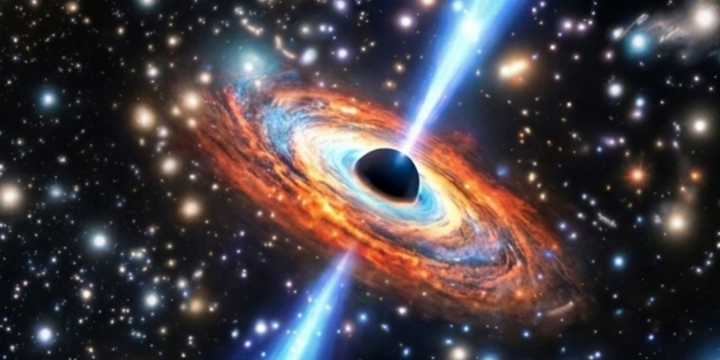
!science@coves.social Two studies propose that dense star clusters in the early universe could have produced massive black-hole seeds, potentially explaining how supermassive black holes grew so quickly [sci.news][phys.org]. The James Webb Space Telescope has observed candidate young clusters, but researchers have not directly detected black holes forming in them [phys.org][lesnumeriques.com]. One model finds that repeated stellar mergers could build stars more than 200 times the Sun’s mass, while another estimates that clusters in the Cosmic Gems arc could produce black holes with masses of 1,600 to 2,700 times the Sun’s [sci.news][phys.org]. The studies also suggest that dense gas around black holes could help explain the early universe’s “Little Red Dots” [sci.news]. Cluster structure, rotation and the initial mass function remain uncertain [phys.org][lesnumeriques.com]. Highlights: • Different clusters: The separate model estimates smaller seed black holes of 180 to 810 solar masses in the less compact Firefly Sparkle clusters [phys.org][lesnumeriques.com]. • Collision threshold: In simulations by a team led by Claire Williams, a University of California, Los Angeles doctoral student, clusters with densities above roughly 100,000 solar masses per cubic parsec formed stars more than 200 times the Sun’s mass across nearly all tested low-mass systems [sci.news]. • Model checks: Researchers used a runaway-collision model that accounts for mass loss through stellar winds to estimate black-hole masses in Cosmic Gems and Firefly Sparkle, then checked the results against direct N-body simulations of compact clusters [phys.org]. "When a star this huge reaches the end of its life, models suggest that it may have no option but to collapse into itself and form a massive black hole" — Claire Williams, University of California, Los Angeles doctoral student Sources: • Ancient star collisions could explain mysterious Little Red Dots and 'impossible' black holes - space.com • Colliding Stars in Early Universe May Explain Stellar Monsters, Study Suggests - sci.news • JWST may have found where heavy black hole seeds formed - phys.org • Actualité : Origine des trous noirs supermassifs : le James-Webb aurait déjà observé comment ils se forment - lesnumeriques.com --- 📰 Story aggregated by Kagi News
!science@coves.social Scientists say Teghaza 001, a Martian meteorite found in northern Mali’s Sahara in 2022, formed at least 4.1 billion years ago and preserves evidence that water later altered its minerals beneath Mars’ surface. The roughly 800-gram rock is among the oldest known Martian meteorites on Earth, and its mix of volcanic minerals offers clues to how the planet’s early crust formed and changed [businessinsider.com][spidersweb.pl]. The study, published in Science, used mineral analyses to determine the rock’s age and identify signs of interaction with water. Researchers have narrowed its possible origin to 13 sites, many in Mars’ southern highlands, but have not identified its precise source. The meteorite may come from terrain no rover has directly examined [t3n.de][spidersweb.pl]. Highlights: • Independent cross-check: Two dating methods yielded the same age, helping validate the result [spidersweb.pl]. Perspectives: Carl Agee, University of New Mexico meteorite researcher: Agee said the meteorite’s texture, mineralogy and composition were unusual among Martian meteorites [t3n.de]. (t3n.de) "It was only after we started looking closely that we realized this meteorite is really unique" — Yang Liu, lead author and researcher at NASA’s Jet Propulsion Laboratory Sources: • Rock found in Mali holds a 4.1 billion-year-old clue into how Mars contained a source of life and other igneous minerals - businessinsider.com • Ancient Meteorite Found in the Sahara Holds Secrets About Mars’ Watery Past - wired.com • In der Sahara gefunden: Was ein 4,1 Milliarden Jahre alter Mars-Meteorit über den roten Planeten verrät - t3n.de • Na Ziemi znaleźliśmy fragment Marsa. Naukowcy potwierdzili odkrycie - spidersweb.pl --- 📰 Story aggregated by Kagi News
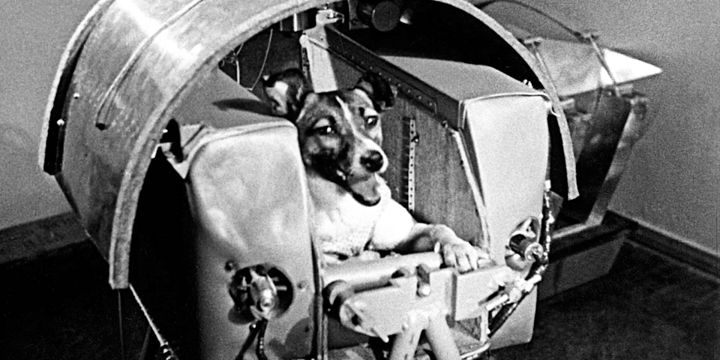
!science@coves.social The Soviet Union launched Sputnik 2 with Laika aboard on Nov. 3, 1957, making the Moscow stray the first animal to orbit Earth. The spacecraft had no system to bring her back, and Laika died within hours as the capsule overheated, according to later accounts [space.com][astronomy.com][mondo.ba]. The flight came less than a month after Sputnik 1 and aimed to test how a living organism responded to launch and weightlessness. Sensors transmitted Laika’s vital signs to Earth, but Soviet officials initially said she had survived for days. Details of her early death from overheating became public decades later [yam.com][mondo.ba]. Sputnik 2 remained in orbit until it burned up on re-entry on April 14, 1958 [astronomy.com][mondo.ba]. Highlights: • Flight response: During the ride to orbit, Laika’s heart rate reached 260 beats per minute, about three times normal, and her breathing increased four to five times above usual [reddit.com]. • Cabin design: The dog cabin measured about 0.8 metres long and 0.64 metres in diameter and included a small window and television camera [reddit.com]. • Ethical legacy: Laika’s mission helped draw public attention to the ethics of animal experiments in space exploration [yam.com]. • Earlier animal tests: Before Laika’s orbital flight, the United States had sent fruit flies on a suborbital flight, while the Soviet Union had conducted suborbital dog tests [yam.com]. Perspectives: Soviet scientists: Scientists later expressed regret that they had allowed Laika to die during the mission [pmo.ee]. (Postimees) Animal-protection groups: Animal-welfare campaigners protested outside the Soviet Embassy after the mission. The launch also prompted numerous complaints to a British broadcaster [yam.com]. (DQ (Yam)) Sources: • On this day in space! Nov. 3, 1957: Laika the dog launches with Sputnik 2 - space.com • On this day, in 1957, the dog Laika became the first earthling to go into orbit. - reddit.com • Daily Quiz: On the early Space Race - thehindu.com • Nov. 3, 1957: The flight of Laika - astronomy.com • TÄNA AJALOOS ⟩ Tänavakoerast Laikast sai esimene elusolend orbiidil - pmo.ee • 首隻登上太空的狗狗「萊卡」:一趟沒有返航計畫的太空任務 - yam.com • Na današnji dan Lajka poletjela u svemir: Prvi pas u orbiti nikada se nije vratio kući - mondo.ba • On This Day in Space History: November 3 - newspaceeconomy.ca --- 📰 Story aggregated by Kagi News
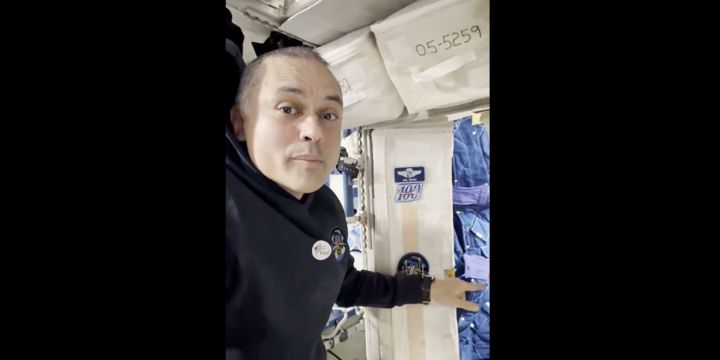
!science@coves.social Three U.S. astronauts aboard the International Space Station cast electronic ballots in the Nov. 3, 2026, U.S. midterm elections, NASA astronaut Anil Menon said in a video showing how he voted from his quarters. Menon, Jessica Watkins and Luke Delaney sent their ballots to election officials, with Menon voting in Harris County, Texas [space.com][time.com][indiatimes.com]. Astronauts request absentee ballots and complete them electronically in orbit. NASA routes each ballot through its communications network to Earth and then to the relevant county clerk; encryption limits access to the astronaut and clerk [space.com][mashable.com]. Menon arrived at the station in July, while Watkins and Delaney arrived in October. All three U.S. crew members aboard the station voted in the election [indiatimes.com][prensalibre.com]. Highlights: • Texas connection: Harris County is home to NASA’s Johnson Space Center, and Menon said he transmitted his ballot there [space.com][indiatimes.com]. "Inside of it is my computer, where I was able to fill out an electronic form and send it to Harris County so I could vote today." — Anil Menon, NASA astronaut Sources: • How American Astronauts Are Casting Their Midterm Votes From Space - reddit.com • How Astronauts Are Casting Their Midterm Votes From Space - time.com • Voting in space: NASA astronauts cast ballots from International Space Station - space.com • Watch: 400 km above Earth, Nasa astronaut Anil Menon shows how he voted from space - indiatimes.com • 'You can even vote from space': NASA astronaut Anil Menon shares glimpse of voting aboard ISS, 400 km above Earth - firstpost.com • 'Yes You Can Vote From Space': NASA's Anil Menon Shows How Crew Cast Midterm Ballots Aboard ISS - news18.com • Nasa astronaut casts midterms vote from space – video - theguardian.com • US Midterm Elections 2026 reach Space as NASA Astronauts cast Votes from 400km above Earth - dailypakistan.com.pk • Watch: Nasa astronaut Anil Menon shows how ISS crew cast ballots from space - indiatimes.com • NASA astronauts voted in the 2026 midterms from space. Here’s how. - mashable.com • Astronautas de la NASA votan desde el espacio en las elecciones de EE. UU: ¿Cómo lo hicieron? - prensalibre.com • Colorado astronaut votes in midterms from space - kdvr.com --- 📰 Story aggregated by Kagi News
!science@coves.social Researchers studying cellophane bees found that their nest lining—a silk-and-polyester film resembling conventional plastic—breaks down in soil within about a year. They say its chemistry could guide the design of biodegradable materials [anthropocenemagazine.org][phys.org]. The team collected linings from Colletes inaequalis nests in Tennessee; fresh material was about 73% polyester and 27% silk by weight [anthropocenemagazine.org][thehindu.com]. After four months in soil, polyester made up about 40% of the lining; by 11 months, the lining had degraded enough to crumble [anthropocenemagazine.org][thehindu.com]. The material remained flexible and intact early in the process, protecting developing bees. Researchers want to identify how it degrades so quickly and reproduce those properties in lab-made plastics [anthropocenemagazine.org]. Highlights: • Plastic scale: Hundreds of millions of metric tons of plastic are produced each year, with much of it ending in landfills or natural environments and persisting for decades to centuries [phys.org]. • Nest longevity: Cellophane bees can form aggregations of 10,000 or more nests and return to the same sites for decades without the lining accumulating in the soil [anthropocenemagazine.org]. "Nature has already solved a problem that polymer scientists are still working on: a bioplastic that is chemically and physically similar to conventional plastics but doesn’t persist in the environment." — Jonathan Coote, assistant professor in Virginia Tech University's Department of Sustainable Biomaterials Sources: • Nature already invented biodegradable plastic. Scientists want to reverse engineer it. - anthropocenemagazine.org • Bee nest linings could inspire plastics that break down in soil - phys.org • Cellophane bees produce a kind of plastic that also degrades, study finds - thehindu.com --- 📰 Story aggregated by Kagi News
!science@coves.social Two photographs taken during the May 10, 2024, geomagnetic storm show bright rays connecting red and green auroras, suggesting that fast-moving electrons may produce both colors, according to a study in Annales Geophysicae [discovermagazine.com]. Sami Solanki, director of the Max Planck Institute for Solar System Research, took one image, and Fraunhofer researcher Philipp Schulz took the other [discovermagazine.com]. The researchers say the field-aligned rays challenge some earlier explanations for red auroras, but the study relies on a handful of photographs. No instrument directly measured what caused the glow, and the authors say red auroras may have more than one cause [discovermagazine.com]. They are asking the public to submit more aurora images taken with exposures of six seconds or less [discovermagazine.com]. Highlights: • Rare observations: The paper's authors said no scientific paper had previously reported continuous rays linking the red and green displays [discovermagazine.com]. • Storm strength: The May 2024 geomagnetic storm was described as the second strongest since 1958, pushing auroras far beyond their usual polar regions [discovermagazine.com]. • Different altitudes: Oxygen emissions produce green auroras roughly 50 to 80 miles above Earth, while red auroras form at altitudes of roughly 125 to 500 miles [discovermagazine.com]. Sources: • Aurora Images Taken by Stargazers May Help Explain Elusive Red Northern Lights - discovermagazine.com • Intense Aurora Photos from Washington, Oregon Coast - More Possible Tonight - beachconnection.net • Likely More Aurora Borealis Tonight: Finding It In Oregon, Washington, Coastlines (Photo Gallery) - beachconnection.net --- 📰 Story aggregated by Kagi News