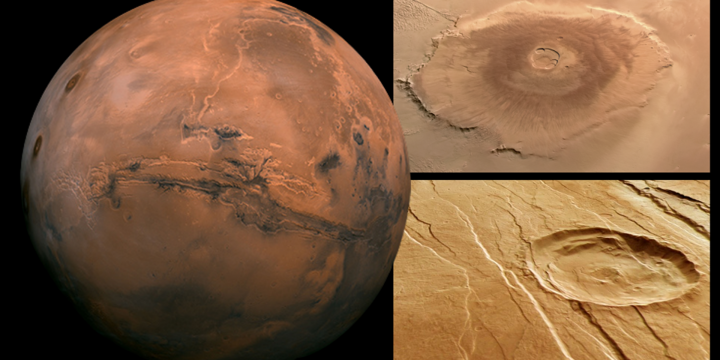
The European Space Agency’s ExoMars Trace Gas Orbiter has detected hydrogen chloride above fissures near Alba Mons, a vast Martian volcano, in a pattern researchers say may indicate gas escaping from magma beneath the surface [space.com][livescience.com][sci.news]. The gas appeared at a location and during a season that atmospheric models could not explain, and images show narrow fractures nearby [discovermagazine.com][sci.news]. The study, published in Science Advances, identifies a possible volcanic origin but does not confirm an eruption [globo.com][sci.news]. Researchers propose that the fractures connect to underground magmatic sources. Ice may seal them in winter, then sublimate as temperatures rise, allowing trapped gas to escape. The orbiter observed recurring, localized signals over four Earth years of targeted measurements [livescience.com][space.com]. Atmospheric processes and surface storage could also explain the gas, and no new lava flow or eruption has been directly observed [sci.news][globo.com]. If magma heats subsurface water, it could create hydrothermal environments of interest in the search for microbial life, but the study found no evidence of life itself [livescience.com]. Researchers say further observations, including over the Tharsis and Cerberus regions, could test whether similar gas emissions occur elsewhere [discovermagazine.com]. Highlights: • Measured signal: The study examined 78 orbiter observations over Alba Mons [mashable.com][sci.news]. • Seasonal chemistry: The study distinguishes the localized signal from a much larger hydrogen chloride release near Mars’ closest approach to the Sun, estimated at about 180 kilograms per second and not considered directly volcanic [sci.news]. • Other volcanic clues: InSight recorded marsquakes, a separate indication of activity inside Mars [space.com][globo.com]. • Fissure scale: Some identified fractures are only tens of centimeters wide, while groups of them extend for tens of kilometers along ridges [sci.news]. Perspectives: Daniel Mège, planetary geologist and study co-lead author: Mège cautioned that a local hydrothermal environment would need to remain favorable for millions of years for life to arise. He said such stability at the seepage sites is not assured. (Live Science) Andrew Coates, space physicist at University College London: Coates said Mars was most likely to have supported life about 3.8 billion to 4 billion years ago. Future missions could search for both past life and any life that might persist today. (Thanh Niên) "Our study offers a complementary and potentially independent line of evidence [of Martian magma]: Atmospheric observations that reveal a possible signature of gas release from a subsurface magmatic system." — Alexander Trokhimovskiy, study co-lead author and researcher at Russia’s Space Research Institute Sources: • European orbiter detects fresh hints of volcanic activity on Mars - phys.org • Gas Detected in the Martian Atmosphere May Be a Sign of Volcanic Activity - discovermagazine.com • Pungent gas above Martian fissures hints at ongoing volcanism at the Red planet - reddit.com • Scientists find the best evidence yet of potentially habitable volcanic vents on Mars - livescience.com • Mysterious Gas over Mars’ Alba Mons Could Hint at Volcanic Activity - sci.news • Mars isn't dead — recent volcanic activity reveals it's just sleeping - space.com • Oh, snap. Martian volcanoes might actually still be alive. - mashable.com • Hinweise entdeckt: Der Mars könnte noch immer vulkanisch aktiv sein - derstandard.at • ¿Marte despierta? Grietas y gas delatan actividad subterránea - diariodigitalrd.com • Mars Belum Mati: Temuan Aktivitas Vulkanik Ungkap Planet Merah Hanya Tertidur - mediaindonesia.com • Temuan Gas Hidrogen Klorida di Mars: Bukti Aktivitas Vulkanik dan Potensi Kehidupan - mediaindonesia.com • مؤشرات علمية جديدة تعزز احتمالات وجود حياة تحت سطح كوكب المريخ - hespress.com • Sonda encontra pistas de atividade em Marte que pode favorecer ambientes para vida - globo.com • Vulkanische Aktivität auf Mars möglich - orf.at • Sao Hỏa lộ dấu hiệu núi lửa hoạt động và khả năng tồn tại sự sống - thanhnien.vn • „Marte este doar adormită”. Un nou studiu arată că sub suprafața Planetei Roșii ar putea exista condiții favorabile vieții - stirileprotv.ro --- 📰 Story aggregated by Kagi News

Comments