🌉 bridged from @pnutzh4x0r@programming.dev by Tidepool

pnutzh4x0r
@pnutzh4x0r.programming.dev.ap.tdpl.io
The lost malloc()
Prompted by another project idea that popped into my mind, I did some Unix archaeology and looked at the original sources. This is the most fun I've ever had reading someone else's code - probably due to the historical significance. But also because of how delightfully approachable it was, compared to modern monstrocities.
This is a short(-ish) post regarding how they handled the mundane and boring task of allocating and managing memory (in C). In the future I'd like to read more about Unix the OS, its design, architecture & implementation.
napcakes.nekoweb.org
NetBSD Adds Alternative Text Editor To vi & xedit For Easing New Users
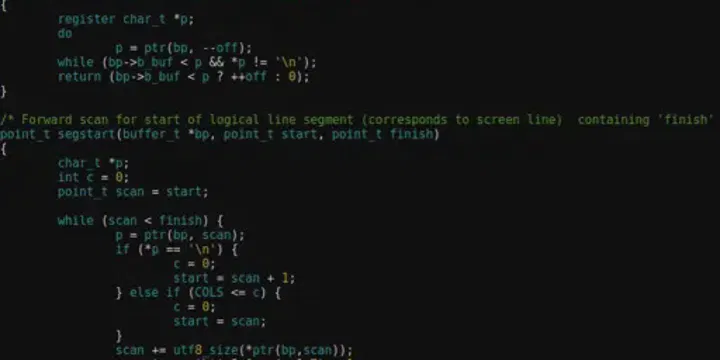
The NetBSD Foundation announced today that the atto text editor is now included in NetBSD to "ease the transition for new users" as an alternative to vi and xedit on the base system.
Atto is a screen-based editor akin to the likes of nano and pico while only being 48KB in size.
www.phoronix.com
Accelerating Ubuntu Core Desktop
cross-posted from: https://programming.dev/post/58633410
Ubuntu Core Desktop is Canonical’s (currently unreleased) immutable and attestable Linux desktop. It represents the most fundamental shift in Ubuntu’s desktop architecture to date, and will mature into the default experience for Ubuntu Desktop over time.
...
With this transition comes the promise of greater resilience, better security, more composability, but also more engineering complexity. In this post I’ll outline the vision, roadmap, and some of the complexities we hope to tackle.
...
We want to build a modular desktop architecture that defines clear interfaces between components. Components such as the display manager, desktop environment, multimedia servers, networking and other core capabilities should adhere to well-defined interfaces and remain implementation agnostic.
The result will be a desktop whose constituent parts can evolve independently, without forcing the rebuild of the entire operating system image every time something changes - one of the key differentiators from other immutable operating system implementations.
discourse.ubuntu.com
Accelerating Ubuntu Core Desktop
cross-posted from: https://programming.dev/post/58633410
Ubuntu Core Desktop is Canonical’s (currently unreleased) immutable and attestable Linux desktop. It represents the most fundamental shift in Ubuntu’s desktop architecture to date, and will mature into the default experience for Ubuntu Desktop over time.
...
With this transition comes the promise of greater resilience, better security, more composability, but also more engineering complexity. In this post I’ll outline the vision, roadmap, and some of the complexities we hope to tackle.
...
We want to build a modular desktop architecture that defines clear interfaces between components. Components such as the display manager, desktop environment, multimedia servers, networking and other core capabilities should adhere to well-defined interfaces and remain implementation agnostic.
The result will be a desktop whose constituent parts can evolve independently, without forcing the rebuild of the entire operating system image every time something changes - one of the key differentiators from other immutable operating system implementations.