If you're wondering why I'm crossposting .ml content or for an account listing of accounts used for it, please see the bottom of this megathread
🌉 bridged from @cm0002@toast.ooo by Tidepool


@cm0002.toast.ooo.ap.tdpl.io
273 Posts1 Comments0 Memberships
Joined September 2026
If you're wondering why I'm crossposting .ml content or for an account listing of accounts used for it, please see the bottom of this megathread
🌉 bridged from @cm0002@toast.ooo by Tidepool
In Return For Being Taught How To Grow Corn, Pilgrims Teach Indians How To Make Stove Top Stuffing
Governor William Bradford reportedly gathered his guests around a cooking pot and held aloft a small red box, explaining that it contained enough of his grandmother's secret family recipe to serve six. "You have taught us how to live off the land," Bradford said. "We shall now teach you how to make the most delectable of all autumn treats. Remember: if it's not Stove Top, it's not stuffing!"

Panamanian Golden Frog
Has AI just cracked Internet [public key] encryption? Rumoured ‘bombshell’ stuns scientists
Paywall bypass: https://archive.today/Wuk90
Several researchers say they have heard that some of the leading AI laboratories have discovered algorithms capable of breaking public-key cryptography in ‘polynomial time’ (or ‘P’ in computer-science shorthand). Public-key cryptography helps to secure everything from banking apps to Internet browsers. It relies on mathematical problems that are considered practically impossible for computers to solve within a reasonable amount of time.
In practical terms, an algorithm that could break public-key cryptography in polynomial time could undermine much of the security on which the Internet relies.
If one of the common public-key systems were indeed found to be vulnerable, its discoverers would face difficult choices: make the algorithm public, allowing others to develop defences against it? Keep it a secret? Or perhaps announce what the vulnerable system is, without revealing how to break it?
Unless all available public-key systems are broken at once, AI labs and governments should alert the relevant institutions — such as the companies that handle Internet security or produce popular Web browsers — that they should urgently update their systems, researchers tell Nature. “I believe companies should follow responsible-disclosure practice if they really have a practical attack,” says Yu Yu, a cryptography researcher at Shanghai Jiao Tong University in China. “That is, they should tell the world that such an algorithm exists without disclosing the details, and give the world a grace period to migrate to risk-free infrastructure.”

AI labs sitting on ‘bombshell’ revelations that could cause global chaos, experts believe
AI companies are sitting on “bombshell” revelations that could disrupt a cornerstone of security for banks and governments in as soon as a few months, leading experts believe. Scott Aaronson, a pre-eminent theoretical computer scientist, told the Guardian there were “well-attested rumours” that powerful artificial intelligence models had broken ground on decades-old maths problems related to how the world encodes secret information. Most of these are abstract breakthroughs. But to experts in the field, they indicate that AI is powerful enough to crack problems that most of them thought would be unsolved for the foreseeable future. Earlier this week, Aaronson wrote that he was “virtually certain, from multiple reliable sources, that the AI labs are now sitting on one or more bombshells [in cryptography]”. “The people who thought AI couldn’t do any interesting maths are definitely wrong at this stage, and so it’s no longer clear where the limit is,” said Steven Murdoch, a professor of computer science at University College London. Speaking to BBC Radio 4’s Today programme on Friday, the mathematician Marcus du Sautoy said “we don’t know” what the broader ramifications of many of these discoveries were, and what this meant for encryption. But, he added, “no one has been talking about the problem which is at the heart of protecting all our electronic secrets. Why is nobody talking about that problem? Some of us are thinking: maybe they’ve already solved it, and of course, it would have such massive implications that everyone has just kept it quiet.”

Blanc de Hotot Rabbit
F/OSS Comics—18. The Birth of 386BSD
Only 9 Sci-Fi Books Are Funnier Than Hitchhikers Guide To The Galaxy
Discovered new ones. Disagree with some. Feel free to post your own.

Google's DeepCrossAttention achieves comparable model quality up to 3x faster
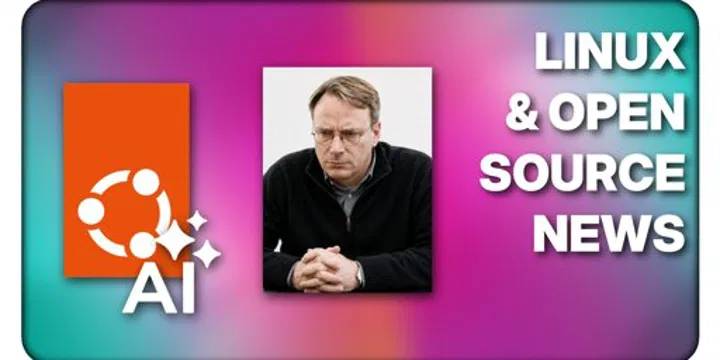
Ubuntu's AI launcher, Torvalds vs AI patches, and Pop!_OS 26.04 - Linux Weekly News
Timestamps: 00:00 Intro 00:29 Sponsor: InterNXT 02:22 Ubuntu's Al plans 05:06 Ubuntu Core Desktop targets 2028 07:53 Linus Torvalds is angry at Al powered stuff 09:59 XNU Linux Lets macOS Userspace Processes Run On Linux 12:07 LibreOffice implements a more restrictive Al policy 14:31 CachyOS implements EACv2 compatible kernel 16:40 Pop!_OS 26.04 LTS released with COSMIC theme updates 18:26 LibreOffice reports good health 20:47 Valve says it might have to raise the price of Steam Machines 22:33 Heroic is becoming the all in one game launcher 24:38 Sponsor: Tuxedo Computers Links: Ubuntu's Al plans https://www.omgubuntu.co.uk/2026/11/ubuntu-ai-launcher-details https://discourse.ubuntu.com/t/beyond-a-launcher-a-new-way-to-interact-with-ubuntu/92365?u=d0od Ubuntu Core Desktop targets 2028 https://www.theregister.com/os-platforms/2026/11/20/ubuntu-core-desktop-targets-2804-debut-with-default-status-in-its-sights/5310837 Linus Torvalds is angry at Al powered stuff https://www.phoronix.com/news/Linus-Torvalds-EXT4-AI-Big XNU Linux Lets macOS Userspace Processes Run On Linux https://www.phoronix.com/news/XNU-Linux LibreOffice implements a more restrictive Al policy https://blog.documentfoundation.org/blog/2026/11/24/updated-and-more-restrictive-policy-for-llm-usage-in-libreoffice-development/ CachyOS implements EACv2 compatible kernel https://feed.itsfoss.com/link/24361/17538226/cachyos-november-release Pop!_OS 26.04 LTS released with COSMIC theme updates https://www.omgubuntu.co.uk/2026/11/pop_os-26-04-lts-released https://system76.com/blog/post/pop_os-26-04-lts-has-landed LibreOffice reports good health https://linuxiac.com/libreoffice-downloads-hit-an-all-time-high-in-2025/ https://blog.documentfoundation.org/blog/2026/11/25/the-document-foundations-annual-report-2025/ Valve says it might have to raise the price of Steam Machines https://arstechnica.com/gaming/2026/11/valve-says-it-might-have-to-raise-the-price-of-supply-limited-steam-machines/ Heroic is becoming the all in one game launcher https://www.gamingonlinux.com/2026/11/heroic-3-0-0-beta-1-brings-steam-and-itch-io-integration-a-new-ui-and-much-more/
BSD Now—691: Tis the Season for Releases
Why FreeBSD Deployments need long-term support and a bunch of BSD releases...

This Week in Plasma: Emoji On-Screen Keyboard
Ubuntu details plans to ‘replace’ its app grid with an AI smart launcher at OMG Ubuntu updated on 26 Nov 2026
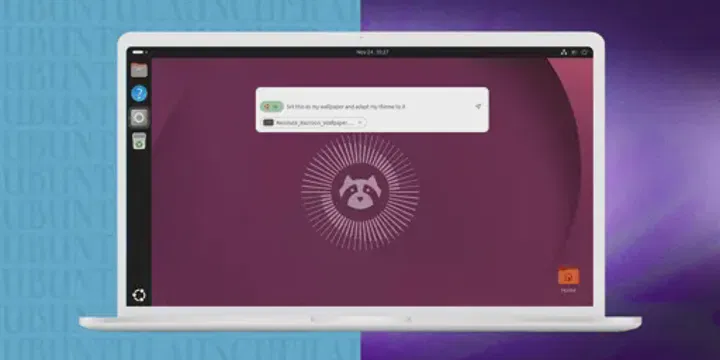
Article content: ——— Canonical has shared more detail on plans for an AI-powered Ubuntu launcher, which it hopes will offer users “a new way to interact” with the desktop. In a post on Ubuntu Discourse, Canonical desktop engineer Didier Roche says the goal is to create a unified ‘entry point’ that lets users open apps and find files, but also access AI features when they explicitly want it. This will go beyond providing an alternative to the app grid, allowing for ‘prompt’ style workflows that use privacy-friendly AI models that run locally. It will support text and voice input, the latter likely making use of the distro’s voice-to-text tool Myna. “Over the past few months, we’ve been discussing how intelligence and modern workflows should fit into Ubuntu”, Didier Roche writes, adding that the new launcher is being build with 4 ‘non-negotiable’ principles in mind: consent, privacy, security and local-first. As such, any AI integration in the new launcher will be opt-in and only triggered when explicitly requested. Anyone uninterested in typing out tasks could use the launcher traditionally, free of any Clippy-esque ‘it looks like you’re trying to…’ nags. Prototype to potential A video of the prototype from October We got our first look at the launcher in October 2026, when Roche uploaded a semi-interactive prototype to the Snap store. As I noted in my original article, this ran through simulations of the kind of things it could, if real, do. The most impressive of the warty-prototype snap’s faux-tasks was one where it was asked to create a calendar itinerary from selected items in the system clipboard history that could be immediately added to the Calendar app. (IMO, a more compelling use-case for saving time, than just appearing to with things like “change my wallpaper to this file”, which to my mind requires more effort to type and more cycles to execute than a simple right-click > set as background would). Simulations can be perfect. Making them real, working code is harder – but it’s coming. Canonical says it’ll share more detail on its new launcher’s architecture in January, alongside an installation version that it wants users to install, break and provide feedback on – feedback, it adds, will shape the overall vision. There’s nothing to try yet, but lots to think about – what would get you using this over your current app menu? Let me know in the comments.
Stalwart is now a drop-in replacement for Microsoft Exchange
Signal Takes a Radical Step to Block Gemini and Siri From Reading Your Chats
Using a privacy-focused messenger like Signal is a good idea, but AI assistants now baked into recent smartphones, such as Google's Gemini and Apple's Siri, can read whatever is showing on the screen. The president of the Signal Foundation, Meredith Whittaker, says this leaves the messaging app between a rock and a hard place, as operating system makers have not given apps good ways to block AI access to their data. This leaves Signal to make do with the tools it has. Its open source code and encryption protocol have backed its privacy promise for over a decade, but neither helps once the operating system starts capturing the screen. Whatever the assistant picks up gets stored, and where it ends up is down to the OS agent, be it a local database or a remote server. Signal has no control over that. The risks Your phone is not the only one that matters. A chat shows up on every participant's screen, and Signal says an assistant reading any one of them can potentially expose everyone in the conversation. On Android, the answer is to turn on Screen security automatically the first time an AI assistant tries to read Signal's screen. This needs you to be on Signal 8.35.1 or later. The app relies on detection because Android differs from vendor to vendor, and many phones give it no reliable way to spot a screenshot attempt once screenshots are blocked. Not every Android phone gets this protection because it depends on Signal being able to notice an assistant at work. On iPhones running iOS 27 and Signal 8.37 or later, a new "Block Siri AI" setting is enabled by default. It blocks screenshots and screen recordings inside the app and hides the app from the App Switcher. Anyone who tries a screenshot gets a message with several choices, and the setting can be switched off entirely or for 10 minutes only. Signal calls the fix incomplete because content can still be pulled from the filesystem, and turning the protection off can potentially expose your content and your contacts' content too. Macs are left out as well. Signal says macOS offers no way to restrict AI access without a major hit to the user experience, and that is why the protection is missing there for now. Signal wants a developer opt-out the signal homepage Signal first tried this on Windows 11 last year, when it used screenshot blocking to keep Recall away from chats. Its ask has not changed since. Signal wants Apple, Google, and Microsoft to give developers an easy, documented way to opt apps out of AI data access, along with better documentation of how these agents work. It says it is hopeful, with some caution, about its talks with Google and Apple. Interestingly, users do have some controls of their own. The EFF says that iOS 27.2 added an "Excluded Apps" list that stops Siri AI from reading any app on it. What stands out to me is how little control an app has over this. Signal can block screenshots and watch for assistants on some Android versions, but the outcome still depends on each person's phone, OS version, and settings. That matters in a conversation with several people, since one person switching the protection off can potentially expose the rest.
Google Will Soon Start Showing App Dev's Phone Number and Address on the Play Store
Google has given every active developer on the Play Store until February 1, 2027, to say if they count as a trader. Developers whose apps aren't delivered in Europe have to answer too, and so does anyone opening a new account. The part that matters comes a month later. From March 1, individual developers who declare themselves as traders will have their phone number and address shown on their app pages to users in every country. Miss the deadline, and Google can block your app updates or pull your apps from the Play Store worldwide. Who counts as a trader? Google leaves that call to the developer. Regular income from an app is the clearest sign, whether it comes from ads, in-app purchases, or paid downloads. Running it as a business, handling a lot of transactions, or holding a D-U-N-S number point the same way. Hobby projects are unlikely to qualify, but Google won't rule on individual cases and tells anyone unsure to ask a legal professional. Calling yourself a non-trader when you clearly are one can get the account suspended or terminated. Developers whose apps stay out of the EEA and the UK can pick the non-trader route. Users in those regions then see a notice saying consumer rights don't cover their dealings with that developer. What will users see? Along with the phone number and address, a trader's app listing shows the D-U-N-S number under the "App support" category and a link to the app's terms of service. EEA and UK users get a bit more, since the developer's name replaces Google's in the "Offered by" field, next to a promise that the developer follows local law. Google takes the address from the account's payments profile. It has to be a physical address that matches official documents, and PO boxes are turned down, so changing it means editing that profile. Is Google asking for too much? I think this is the latest in a long line of asks. In 2023, Google added an "About the developer" section to Play Store listings and made new organization accounts supply a D-U-N-S number. Android is also getting its own developer verification for apps installed outside Play, with plans to take it global in 2027. Europe's rules are the reason behind all of this, and wanting traders to be reachable there is fair. What I don't get is why a user in another country needs a stranger's address on an app page. Free apps are the ones I keep thinking about here. Ad income alone is enough to make someone a trader, so a small tool with a single banner could put its maker's address in front of every Play Store user. Apple handles its European trader duties more narrowly. It shows the details when an app is distributed in the EU, and individual developers can use a PO box if they back it up with a bill or receipt. In contrast, Google shows its details worldwide and rejects PO boxes. For a solo developer working from home, that leaves a hard choice between a public phone number and address, or keeping the app off the store.

Claude Code sabotage: preliminary benchmarking
A Deterministic Subexponential-time Algorithm for the Discrete Logarithm Problem
Houdan
Linux Dropping Last Of The 1980's VersaModular Eurocard "VME" vme_user Code Over AI/LLM Noise
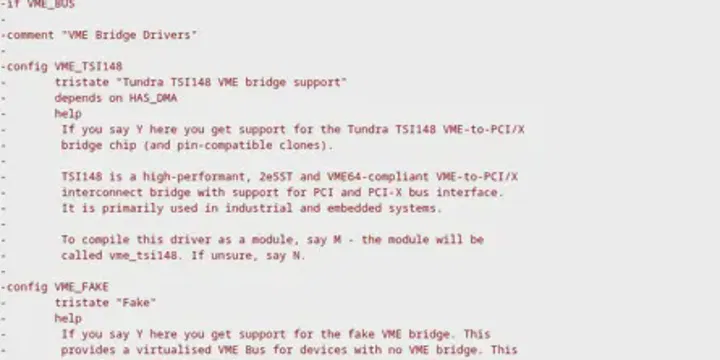
The Linux kernel is removing more old driver code due to AI/LLMs generating more noise over this unused, obsolete code within the source tree. Following various old ISA and PCMCIA code removed, ham radio, ISDN, and other old network code, the latest vintage artifact set to be stripped out of the Linux kernel is around the VersaModular Eurocard "VME" bus vme_user driver from the 1980s. The Linux kernel ahead of tomorrow's Linux 7.4-rc5 release has seen a post-merge-window pull request for removing the last of the VersaModular Eurocard "VME" parallel computer bus code's vme_user driver for user-space access. The "vme_user" driver that for years has been within the Linux kernel's staging area -- the VME code was demoted to staging in 2022. There is no other kernel code left in the tree that is dependent upon the vme_user driver and with it not being maintained and for obsolete hardware, it's time to drop it given that it's been causing AI/LLM noise on the mailing lists. The patch removing it drops nearly 9k lines of code. The rationale on the removal patch:
"The staging VME userspace drivers are orphaned and Greg KH requested a patch to remove them instead of continuing to fix staging-only issues.

Remove the driver, its documentation, Kconfig and Makefile entries, the VME MAINTAINERS section, and stale VME options from the powerpc 86xx config."
In today's staging pull, Greg Kroah-Hartman confirmed the AI/LLM noise:
"Here is a single staging driver patch that removes the vme_user driver. There is no more users of it and the LLMs are falling all over themselves attempting to find all of the "security bugs" in this driver, despite no one ever actually use it. So just remove it to keep from wasting everyone's time.

This removal has been in linux-next for quite a while with no reported issues."
So barring any last minute issues, the vme_user code will be removed ahead of tomorrow's Linux 7.4-rc5 kernel release.
systemd 263-rc1 Ships Initial Rust Code, Experimental Pseudo TTY Broker & Manifest
Systemd 263-rc1 was just tagged in gearing up for this next major release. Systemd 263 brings initial support for using the Rust programming language for creating new Rust programs. Plus systemd 263 ships with a new pseudo TTY broker service, a manifest tool, a new keyring service and much more. Some of the highlights of systemd 263 include: • As previously covered, systemd now has support for Rust programs. Rust code is now available in the systemd leaf code but not in the systemd core library code yet. The intent is also on Rust being used for new development and not rewriting existing C code in Rust just for the sake of it. • A new experimental pseudo TTY broker. The systemd-ptybrokerd service allows pseudo TTYs and keeps them open independently of the client that requested it. This, for example, can be used to disconnect from a container console and reconnect later on without stopping the container. • A new systemd-manifest tool to generate and verify file manifests for directory trees. The default format is the UAPI.16 File Manifest. • A new systemd-keyring-setup.service to enroll X.509 certificates into the kernel's dm-verity, fs-verity, and BPF keyrings early during boot followed by sealing the keyrings. • Reading and verifying of large systemd journals is now faster -- can be about 1.7x faster for the default journalctl output. • The systemd-networkd and networkctl have been merged into a single multi-call binary for a smaller installation footprint. • systemd-resolved can now verify ML-DSA-44 DNSSEC signatures. • A new SecureBits= setting for system.conf and user.conf to set secure bits on the service manager itself. • A new unit setting of IOuringFilter= to set an allow list or deny list of IO_uring operations. • systemd-report has new metric providers for reporting hardware temperatures, free space on writable file systems, SMART information, and NVMe disk health details. More details on the plethora of systemd changes and new additions coming to systemd 263 can be found via today's 263-rc1 announcement.